If this was a website evaluating the coolest rock and pop musicians ever, David Bowie (born David Robert Jones) would be a lock for a ***** rating. Here's somebody who constantly reinvented himself, showing a knack for jumping onto bandwagons at exactly the right moment; who wrote big hit singles and interesting deep cuts alike in many of the genres he tackled; who could appeal to "low-brow" and "high-brow" rock music fans alike; who made a strong impact on the rock world with a voice that's either awesome or horrendous (I still haven't decided which) but was definitely incredibly interesting. He's one of those rock musicians whose every career move seemed, for lack of a better term, important, as if he had just somehow legitimized the genre he was currently working in simply by choosing to work in it. If a list existed of "the least hip or cool things somebody could have said about rock music in the 70's onward," wouldn't "David Bowie totally sucks and I hate him" have to rank pretty much near the top?
The biggest thing about Bowie's overall coolness, though, is that it ends up distorting my impressions of his albums if I'm not careful. It's really easy for me to look at a Bowie album and go, "Hey, it's that album from his *so and so* period, with *such and such* cool features, and it has the great songs *this* and *that* on it, that's a really good album," ... and then listen to it and go, "Oh yeah, this isn't as good as I remember." Most Bowie albums, for me, are at least somewhat of a chore to get through; I mean, most rock artists (at least ones that I would consider reviewing) have plenty of albums in the "good but not a classic" category (roughly 8, 9 and A ratings), but there are plenty of albums in this range where at least a significant percentage of the album can make me go, "yeah, this is pretty nice stuff." With Bowie, it's not uncommon for me to start to fidget during an album where I have the rating filed away in my mind as a high A or even a B; I start wondering why on earth I thought the album was so good in the first place. Then, of course, I'll remember a fantastic song or moment from earlier in the album, and a few more will immediately pop up, and I'll quickly feel satisfied, but those moments of doubt happen a lot with me.
Ultimately, with Bowie, you just have to cling onto the best moments like grim death, or (if you're anything like me) you'll start to wonder what the big deal about the guy was in the first place. When it all comes together for Bowie, the effect is breathtaking, as atmosphere, catchiness, cheekiness, rawness, quirkiness and half a dozen other positive adjectives converge in a way that few could have mustered. It's just that, well, there are a lot of other moments to deal with as well. He's made a few terrific albums, and plenty of great songs, and yet if somebody asked me I was a Bowie fan, I'd end up saying no. An admirer, sure, but not a fan. Then again, wasn't Bowie's career designed for admiration and not for any deep abiding love?
Tim Light (timlight99.hotmail.com) (8/13/11)
I was just a teenager when Space Oddity hit the charts. I loved it. Then he disappeared for a bit. Then he came back with a
string of good singles; Life on Mars, Jean Genie, Changes, Starman, all of which I loved. I wasn't listening to the lyrics, but I
just loved the way he sang, and the general spaceman idea.
I wasn't entirely comfortable with his persona at this time. I could cope with the good-looking space boy, but struggled to come to
terms with the man who wanted to wear a dress. I had a very conservative upbringing, and this was a real departure from what the
world was used to. The accepted wisdom was that any form of sexual perversion was OK, so long as it was in private and didn't
involve children. I like to think I've grown up a bit since then.
Bowie kept reinventing himself, and I found his subsequent singles to be hit and miss (mostly miss). it was some time later that I
started listening to his albums. Mostly, I was just baffled. I couldn't get anything out of them. I didn't like the music. I
didn't like his voice (he reinvented the way he sang, and I don't know why - the result was awful). I didn't understand his
lyrics. I was seriously missing the point.
The big exception is Hunky Dory, which includes some great songs, including some of his best singles, and Life on Mars, which is my
all time favorite. It was made at a time when his voice was at its cutest - a real trade mark sound - not very masculine, but very
seductive. Ziggy Stardust is ok, and I especially like Low, but only because it's really a Brian Eno album.
Overall, an interesting bloke, some fab singles, a couple of great albums, and a baffling mixture of wierd and sometimes
unlistenable albums.
Best song: Love You Till Tuesday
Bowie's "debut," of course, wasn't really his debut; he'd been trying to make his mark since 1964, jumping from style to style with one failed single after another, but this was the first time he'd recorded enough tracks in a single general style to have enough for an album. There's an expanded re-release floating around, extensively covering all of his mid-to-late-60's attempts at music-making, but I'm content to have my single-CD 12-track release. As for the music, this is Bowie trying to make a Something Else/Between the Buttons-style musichall/Brit-pop collection, but not really succeeding. His singing needed a lot of work at this point; the opening "la la"'s in "Sell Me a Coat" are the worst example, but there are more than a couple of moments on the album that make it obvious that Bowie wasn't going to have any success along the path of croon-balladeering. The music is full of "cute" (read: stupid) sound effects like the British announcer at the beginning of "We Are Hungry Men," the lyrics are extremely childish in an unimpressive way (he's clearly gunning for a Ray Davies or Syd Barrett approach, but failing), and the music has pretty much no grounding in rock music whatsoever.
Still, while I don't like this album much, I can't really hate it either. "Love You Till Tuesday" is a fun orchestrated pop song, and his "da-da-da-dum" singing is a terrific touch. Other songs are all afflicted by an excessive amount of twee or by silly lyrics or by silly sound effects, but it's hard to point to any one particular song and go "Man, this is horrible." Taken in other contexts, the songs on here could have made cute diversions; put together, the effect is a little underwhelming. If you're a major Bowie historian, you'll want this or one of the expanded releases of this, but regular Bowie fans could probably do fine just to find "Love You Till Tuesday" on a compilation or something.
Ben (benburch500.hotmail.com) (02/13/12)
This is actually the only David Bowie album (and possibly the only album in my collection, or at least one of the very few) that I
can't name a single track I care for. They're all just a bunch of ultra weak piano and fake music hall numbers that show David at
his most self indulgent. Sure, they all have good melodies - except the last song, something about a grave digger, can't remember
the name which doesn't have a melody at all - but David's voice just hampers them. "Uncle Arthur" is really the only song from this
album I have any respect for, and "Love You Till Tuesday" is charming but nothing else. Not that I'm much of a fan of "Between the
Buttons" either, but I'll take it any day over this. This album sounds like a bunch of outtakes from the Kinks' "Something Else." l
give this a solid 1 out of 10.
Best song: Space Oddity
For this album, David decided to play a Dylan-influenced hippie. There's a lot of acoustic guitar, and a lot of rambling, borderline nonsensical lyrics and melodies, and whatever else Bowie's checklist indicated to him he'd need to act the part. The most Dylan-ish tracks on the album, alas, are the worst, and they're pretty long. "Unwashed and Somewhat Slightly Dazed" might have been borderline acceptable at 3 minutes (the opening 30 seconds or so, with the moody acoustic lines and melancholy pings of electric guitar, show a lot of promise), but it gets extended to a nearly unbearable 6:12, featuring ridiculous lyrics, endless harmonica solos and other features that would have best suited a mocking satire of Dylan rather than an homage. "Cygnet Committee" is even worse, taking almost 10 minutes to go absolutely nowhere and providing nothing in the way of interesting melodies or intriguing atmosphere. I almost went with an 8 for this album, but these tracks have just gotten worse for me with each listen, and they're the main reason I can't give this album anything higher.
There are some other mediocre throwaways (the brief interlude "(Don't Sit Down)," "Letter to Hermione," "Wild Eyed Boy from Freecloud"), but fortunately the rest ranges from good to great. The opening title track, of course, is the main reason that people have any significant interest in this album; it's just about the best moon landing-inspired song not found on To Our Children's Children's Children. This, of course, is Bowie's famous "Ground control to Major Tom" song, tracking Major Tom's trip into space from launch until he makes it out there and ground control loses him (immediately after the great simple exchange of, "Tell my wife I love her very much,"/"She knows"). The music is full of fantastic elements, from the nearly perfect use of mellotrons in the right spots, to the great set of melodies, to the simple epic guitar lines before the upward synth line that proceeds the "floating" breaks, to goodness knows what else. If nothing else, this is the first time to indicate that maybe, just maybe, David Bowie was actually a potentially major talent.
The other good tracks, somewhat oddly, are all on the second half of the album. "Janine" has a nice mix of acoustic and electric guitars and a melody with an interesting flow, and Bowie's rough vocals somehow serve the song well. "An Occasional Dream" could have made a decent (not great, but decent) Moody Blues song; "God Knows I'm Good" is a surprisingly charming story (with a nice melody to boot) of a woman stealing food and pleading that God knows she's still a good person; and of course, "Memory of a Free Festival" ends up working as a Bowie version of "Hey Jude." The main song isn't especially great, moody accordion notwithstanding, but the extended coda, featuring the repeated phrase, "The sun machine is coming down and we're gonna have a party," is reeeeally addictive. Besides, the moody accordion never disappears! It's a nice touch, what can I say.
Overall, Space Oddity is a decent enough effort, but it's pretty clear that Bowie was going to have to head in yet another different direction if he wanted sustained success. Of course, just how true that statement would turn out to be over the years wouldn't have been apparent at this point, but that's aside the point. As with most Bowie albums, you're best off grabbing the better material and ditching the rest.
"Langas de los Langas" (putolangas.hotmail.com) (07/13/10)
Hi. I'm glad you are reviewing Bowie, I wonder why won't you give Red Hot Chili
Peppers a try?
Anyway, I don't think you have put too much effort in your "Space Oddity" review.
The title song has enough subtleties and hooks to cover pages and pages of text.
It's simply Bowie's masterpiece (maybe only surpassed by "Starman") and I think it's
a shame you didn't get into more detail with it. For instance, haven't you ever
thought that when Major Tom gets lost, he actually DOESN'T CARE? The second chorus
"Planet Earth is blue, and there's nothing I can do", being identical to the first
one, has always sounded to me as someone who is totally willing to get eternally
lost into outer space rather than coming back to Earth, as the beauty of space has
overwhelmed him and there's nothing he can do about it. I always picture that verse
with Major Tom blissfully floating in the void, round and round like Darth Vader at
the end of Star Wars, but with a dumb smile on his face. What's wrong with me,
Doctor?
As for the rest of the record, yeah, it's a bit uneven, but so are all Bowie's
records, aren't they? I personally love "Janine", specially the way the song opens
with three classic chords (which have been used a million times) and you're like
"Oh, yeah, I've heard this before", but as soon as the lyrics start, you are
rewarded with a much longer (if still simple) progression of chords that make the
song far, far more interesting than you would've guessed in the first place. God, I
like that song.
Ben (benburch500.hotmail.com) (02/13/12)
David shows some signs of getting his act together, and I'll give this album a slightly more respectable rating of 2, since there's
exactly two out of ten songs on here I like: The title track and "Unwashed and Somewhat Slightly Dazed." The singing on this album
is also atrocious, as well as about 80% of the rest of the songs. I totally agree with your assessment of "Cygnet Committee" but I
really can't stand "The Wild Eyed Boy from Freecloud" and "Memory of a Free Festival." Excruciating stuff, this is only one for die
hard fans.
Best song: The Man Who Sold The World
So anyway, this being largely the work of his new guitarist and his producer, this largely ends up as a messy hard rock album that often borders on heavy metal. Of course, Bowie's voice doesn't really work with this approach; he sounds far too weak and wimpy here to live up to the riffs and sounds that often dominate. Still, there's at least one classic here in the metal area of things, courtesy of the opening "The Width of a Circle." I kinda hated it at first because it was so loose in structure and without any especially strong riffs, but the guitar work is energetic and varied enough that it won me over, and the "heavenly" section with the "oh oh oh ..." vocals is rather nice. Unfortunately neither "Saviour Machine" (which has some weird annoying synth sound on top of the main guitar riff), "She Shook Me Cold" (interestingly ugly at first, but turns into a boring jam) or "The Supermen" ultimately satisfy me on the heavy rock side of things. They're dark and moody and twisted, I get it, but I just don't find them interesting enough for me to care, and that's a good chunk of the album down the drain right there.
Of the remaining five tracks, the infamous title track is easily my favorite. I know it was slightly overexposed in the early 90's thanks to Nirvana covering it, but so sue me, I like the riff, I like the "Oh no, not me ..." counter-melody, I kinda like the lyrical subject matter, and I just think it's clearly the best song by pretty much any measure. The other four aren't fantastic, but they're good enough: "All the Madmen" is a good mid-tempo heavy stomper (though the carnival sounds, as much as they may match the subject matter, annoy me a bit) about a world where the only sane people left are in asylums; "Black Country Rock" is another decent mid-tempo rocker that's at its best when the guitar parts harmonize; "After All" is a nice low-key acoustic number on an album that badly needs a nice low-key acoustic number; and "Running Gun Blues" is an okayish acoustic-to-electric song with "controversial" lyrics and a terrible vocal delivery. Namechecking, wooo.
The thing is, there are some elements that make me want to talk myself into liking the album more. I mean, the atmosphere and the lyrics do work together in a pretty intriguing way on the whole, and it definitely has some strong standout tracks. It would probably help if the album had more strong material in the second half (aside from the title track, the second half is kind of a wasteland) and it left a stronger impression on me at the end. As is, there are plenty of Bowie albums I'd rather listen to than this one.
Ben (benburch500.hotmail.com) (02/13/12)
Other than hearing various songs on the radio and in movies and stuff, my first real introduction to David was Nirvana's cover of
this albums title track. This was the first David album I remember sitting through all the way, and I liked it.
I also used to get annoyed by "The Width of a Circle," but now I like it, mainly for the same reasons you now do. "All the Madmen"
is great too, and I think those weird noises fit the song too, and they don't overstay their welcome. "Black Country Rock" is one
of my top 10 or 20 favorite Bowie songs, and in addition to the dueling guitars at the end, I love the bass and vocals. The closest
the album comes to boring is the dirge "After All," which I personally don't care for. Too slow and boring. "Running Gun Blues" is
another of my all time Bowie favorites, same for "She Shook Me Cold." "The Supermen" gets a little ridiculous after a while, but
it's okay, and "Saviour Machine" is another one I recently started to warm up to, I myself used to get annoyed by that noise. Just
like the rest of the world, my favorite here is the title track. I love the percussion and riff (especially during the chorus), I
just wish the vocals were stronger. Big surprise coming after what came before it, I'll give this one a solid 9.
Best song: Life On Mars?
The first half, of course, contains two of his biggest hit singles ever, and they're both top-notch as far as Bowie goes. "Changes" is a little rambling in the verses, but the instrumental breaks and the chorus are as interesting as can be, almost reminding me of prime Elton John but retaining a brand of intrigue that's definitely unique to Bowie. "Life On Mars?" somehow didn't grab me much the first couple of times, as it struck me as just an unremarkable over-orchestrated ballad; now, I'd have to rate it as one of the greatest over-orchestrated ballads I've ever heard. The lyrics, about wanting to lose yourself in a fantasy world because the real world is dull and uninteresting, are phenomenal, and Bowie belts them with passion over a combination of a good orchestral arrangement and great Rick Wakeman piano lines. Who'd have thought such an interesting combination of bizarre social commentary and catchiness could have come from a "My Way" parody?
The first half, aside from the semi-fillerish, kinda lazyish country of "Eight Line Poem," also contains three songs that are among my favorite Bowie pop songs. "Oh! You Pretty Things" is upbeat piano pop of the highest caliber, both in the verses (which strangely, though not enough for me to claim any sort of ripoff, remind me of Procol Harum; I keep getting "The Milk of Human Kindness" going in my head when I listen to this) and the ridiculous chorus, which basically turns the track into a sexually ambiguous Paul McCartney song. "Kooks" might be intended as a relatively slight track, intended for his son, but it strikes me as a nice ode to a warm friendship, and I've always enjoyed it. "Quicksand" doesn't have an especially strong melody, but it gets by on atmosphere and, shockingly, emotional power; the line, "And I ain't got the power anymore" has to be one of the most emotionally punchy moments in his whole catalogue.
As mentioned, the second half isn't quite as fantastic as the first, but it's still decent. "Fill Your Heart" is a silly cover with singing that might generously qualify as mediocre, and not one I especially look forward to hearing. Then comes a three-song "tribute" portion that strikes me as kinda bizarre; "Andy Warhol" starts with a seemingly random synth sequence played over conversation between Bowie and the producer about how to pronounce his name, but at least it turns into a mildly interesting up-tempo, downbeat acoustic number. It kinda strikes me as a stylistic leftover from Space Oddity; the good half, I mean. "Song for Bob Dylan" has some nice electric guitar licks, but aside from the namechecks, I'm not really sure what it has to do with Dylan; the lyrics certainly don't seem especially influenced by Dylan, aside from maybe a couple of lines in the chorus. Fortunately, "Queen Bitch" (a clear Velvet Underground/Lou Reed tribute) is top-notch, laying out all of the glam-rock elements that David would draw upon for the next couple of years, and it can compete with the best material from those albums.
The album ends on a somewhat deceptive note with "The Bewlay Brothers," but it's not a bad note. David returns to acoustic singer-songwriter mode, and the climactic moments, from when those painful (in a good way) guitar noises pop up, through the "... we were so turned on" lines, are enough to make the song worthwhile. The "main" melody isn't especially impressive, and I haven't the slightest idea what the lyrics are about (or if they're supposed to have meaning), but the song is a success no matter what.
So hats off to David Bowie! This wasn't quite his commerical breakthrough (it still took Ziggy to get him over the hump), but it's his artistic breakthrough, and history has rightly treated this well. I'd actually consider recommending getting this one first; it's not representative of his overall sound, but then again, no Bowie album is representative of his overall sound, so you might as well start with something that relies solely on musical merit, if you get me.
Ben (benburch500.hotmail.com) (02/13/12)
I'm a little "Hunky Dory" about this one. Sure, this is where David started writing (by his standards anyway) "intelligent" songs,
but even I feel there's an unnecessary amount of filler here, especially for an album that has so much promise. I don't get what
all the fuss is about concerning "The Bewlay Brothers," it belongs on "Space Oddity" and sounds exactly like one of those acoustic
dirges on there. "Eight Line Poem" is okay, but overstays its welcome. "Fill Your Heart" and the ultra stupid "Andy Warhol" don't
do much for me either. The remaining tracks are more or less fantastic. "Changes" (better than the Black Sabbath song) and "Oh You
Pretty Things" are great uplifting piano songs, and "Queen Bitch" would have made Lou Reed proud. Otherwise, "Kooks" is cute, and
"Song for Bob Dylan" is another favorite, but the albums real centerpiece is "Life on Mars?," featuring a great crescendo on the
chorus and easily trumps over everything on the twisted "Man Who Sold the World." I only days ago started to realize what was so
great about this album, but even I have to admit its overrated. Too much filler for its own good. Very fun and pleasant album
though, I just expected more after the previous album. I'll give this one a 7.5.
Best song: Starman or Suffragette City
Well, maybe it's just the passage of time, or maybe it's just all of the times I've ended up listening to the album (perhaps leading to some form of Stockholm Syndrome), but my appreciation for it has gone up enough over time that I admire it at a level that's reasonably close to how most other people treat it. I still consider it pretty weak as far as all-time great albums go, but as far as very good albums go, this is fantastic. An album with 11 songs, a few of them terrific, none of them bad, all of them with at least some distinctly interesting aspects, with reasonable diversity, has to be given a very high rating, doesn't it? If not, there's no sense to this whole reviewing business.
One aspect of the album I consider a bit of a misnomer is the way this album is labeled as a "glam" album. Calling Ziggy a "glam" album is kinda like calling The Beatles a "guitar-rock" album; while there's probably more glam on the album than any other particular genre, there's not so much more glam here than every other genre combined that narrowly pegging the album into that category necessarily fits in. I mean, "Soul Love" is basically a soul song (naturally) at heart; "Five Years," "Starman" and "Rock 'n' Roll Suicide" could have belonged in a Broadway show without much difficulty, and "Lady Stardust" is basically a conventional anthemic piano ballad. Sure, the other songs on here can basically be pegged as glam rock (either partially or entirely), but still, those tracks make up just a little more than half of the album.
Neither the glam portion of the album nor the non-glam portion is quite perfect, but they're each really good on the whole. "Five Years" introduces the concept (not really focused upon the rest of the album), of an alien rock star come down to cheer up the world before it ends in five years, and while it ends up somewhat overdramatic (not necessarily in a bad way, but not necessarily good either), I do find I feel a genuine twinge of emotion in the line, "I never thought I'd need so many people." It's rambling, yet like much of the rambling material on this album, it ends up being quite memorable at the same time. "Soul Love" isn't quite great either, but it's definitely really good, especially in the first half of the verse melody and in the closing "chorus" lines of, "Inspiration have I none/just to touch the flaming dove/All I have is my love of love/and love is not loving."
Skipping ahead (sticking to the non-glam tracks for now), "Starman" is the point in the story where Ziggy writes a song to inspire hope in the world, and it's only fitting that it should be one of the highlights of the album (and Bowie's career). The verses feature a nice low-key guitar groove that reminds me a lot of Loaded-era Velvet Underground, but it's the grandiose chorus, less rock and more showtunes (and just fine for it), that makes this song work as well as it does. And don't you forget the simple repeated piano notes that bridge the verses and the chorus; the song wouldn't be quite as great without it. Elsewhere, "Lady Stardust" may be glam in subject matter (about Ziggy in drag, playing his songs), but it's just top-rate piano balladry as far as I'm concerned. And finally, "Rock and Roll Suicide" is as over-the-top as the album gets, and while I don't love it (I still don't feel like it ends the album on quite the high note that other people seem to think), I'll definitely admit that the mix of Bowie's screams and his deep-voiced backing vocals provide some real power.
Among the glam tracks, the only one I'd consider a weak link is "Star," yet even that one works as an enjoyable boogie-rocker with addictive guitar and piano parts. "Moonage Daydream" has one of the most fascinating choruses I know, careening from anthemic majesty into angry riffage in an incredibly intense jolt, while bringing great power to a section whose lyrics start with "Keep your 'lectric eye on me babe" and end with "Freak out in a moonage daydream oh! Yeah!" The cover of "It Ain't Easy" has never been one of my absolute favorites on the album (oddly, it didn't even belong to the album originally, as it was recorded during the Hunky Dory sessions), but even I'd be hardpressed to deny the impressive contrast between the countryish licks and the stomping "IT AIN'T EASY..." chorus. It's not really a classic, but it kinda feels like one.
The remaining tracks are grouped together on side two, and they're an impressive bunch. "Hang on to Yourself" is often considered a quintessential glam-rock song, but I'm not sure I'd have known that if I hadn't been told; all I know for sure is that the riffs are just heavy enough without losing any crispness, the song is as catchy as anything on the album, and that the tempo feels just about perfect. The title track is, of course, the album's brief full-fledged return to the concept, and while I don't really care about the lyrics, I do care about the interesting combination of the slow winding riff in the verses and the more driving, powerful riffs in the chorus, and I enjoy the song plenty. And finally, as for "Suffragette City," is there any Bowie song that would be more of a blast to do in karaoke? It's not just the great riffs, and not just the "WHAM! BAM! THANK YOU MA'AM!" after the false ending; there are just so many fun vocal moments in this song that I can't even try to count them. If "Starman" is the best of the softer songs on the album, then "Suffragette City" is definitely the best of the harder ones.
Again, the album is a long, long way from perfect, but there are so many nice aspects that a grade less than this seems absurd. Don't get it first - there's an unreasonable chance of disappointment, I think, and Bowie's made better albums - but get it relatively early.
Anton Jägare (antonjagare.hotmail.com) (08/13/10)
Hmmm.... I don't know, but I've always loved this album from the first time I heard
it, when I had no idea about its high reputation and didn't even recognise a single
song. In fact, I might even say that of all obviously "phony" records in the world,
with silly concepts that fall apart before they even begin and lyrics and images
perfectly adjusted to fit in with the times rather than to convey some deep message,
this one moves me the most. Seriously now, every time I put on "Five Years" I get
completely drawn in and by the time it finally reaches it chorus I'm ready to cry
and wail, even if I have no idea what the song is about (well I do know, but I
didn't then, and I still feel like crying). Same goes for practically the whole
record.
Personally I feel that the record sags just a little bit towards the middle, even if
I still like all of the songs, and then it's followed by the trio of rockers which I
just absolutely adore, where it just feels like very single guitar note, cymbal
bash, backing vocal and wordless vocalisation from Bowie is just placed perfectly.
And of course I should hate any record that ends with a weak-voiced phony Brit
screaming "You're not alone!" at the top of his lungs but somewhere the whole glam
thing just breaks through and I know Bowie ain't serious about anything on this
record, which somehow almost lets me take it seriously. Oh well, I guess I'm just a
sucker for some good old tongue-in-cheek over-the-top silly British glam. Heck, I'm
similarly moved by T. Rex' "Children Of The Revolution" and Slade's "How Does It
Feel".
Anyway, I still wouldn't give the record more than a very high 13, low 14 on a good
day, because despite everything Bowie just never was the kind of genius songwriter
it'd take to tip such a obviosuly glammy album all the way over for me (I'd say only
Russell Mael is).
Ben (benburch500.hotmail.com) (02/13/12)
Now where did THIS come from?! I honestly can't find anything bad about this one, the production is terrific, the songs are
beautiful and David -at last- put together an album I can sit through all the way. Easily my favorite album by David, this is one
of my all time favorite albums ever. As much as I like "Starman" I think it's the weakest song on here. A better choice for a
single would have been the astonishing "Moonage Daydream" which is by far my favorite Bowie song. The guitar solo at the end tops
it all off, in addition to the strings, vocals and piano which give the song an epic feel. Only problem is I can't figure out the
subject matter. David also does a great shot at R&B with "Soul Love" and hard rock with "Hang on to Yourself" and "Suffragette
City" (the latter reminds me of "Back in the USSR somehow). Sorry for my rambling, as you probably expected, I'll give this the
perfect 10.
Jeremiah Methven (jeremiah.methven.gmail.com) (08/13/14)
I got this album pretty early on in my adventures into the wide world of rock and pop music, so without having really heard too many
albums of comparable quality (at the time, I was into third-rate 90s alt-rock bands like Live and Our Lady Peace), Ziggy was mind-
blowing to me. Ultimately, I agree with your D rating though so for me, my appreciation of this album has definitely declined over time.
At least it's held up better than the other album I remember really liking at the time, Guns n' Roses' "Appetite for Destruction." Now I
find that it's one I fairly rarely listen to - I'm much more inclined to pull out "Heroes" or Low if I'm in the mood for Bowie. Funny
how that goes...
trfesok.aol.com (06/13/15)
I used to give this the nod as his best album, but I'm less sure about that now. The cabaret element which you point out is less obvious here than on his previous albums, but has gotten a bit more irritating as I get older. ("Lady Stardust"). And while I didn't originally think there was a real storyline, I guess there is, but it's profoundly ridiculous.
But it's still up there. Partially because Bowie does have a clever way with left field phrases in his lyrics ("moonage daydream", for example). And the rock songs are very energetic and lots of fun. "Starman", I agree, is by far the best of the ballads and one of Bowie's classics. That and the other high points ("MD", the title track, "Hang on to Yourself" and "Suffragette City") compensate for the throwaway nature of some of the rest of the songs (including "It Ain't Easy". It was actually a popular cover song at the time, but why?).
My copy has five bonus tracks -- the demos for "LS" (solo piano) and the title song (one acoustic guitar -- very nice, actually). There's a remix of the "controversial" single "John, I'm Only Dancing" that was left off the album (seems pretty tame to me) which is quite catchy; another mid-temp rocker called "Velvet Goldmine" (not a great melody) and another more upbeat one called "Sweet Head", about two of Ziggy's favorite activities. One of which is rock'n'roll. As for the other -- well, I think that Bowie's camp bisexuality at this point was a calculated put-on designed to get attention and nothing more (come on, he's married to Iman!!) Of course, it worked in the UK -- 1972 was still a very risky time if you weren't straight, sexual "revolution" or not. Of course, this was 10 years before AIDS -- which may have changed the storyline quite a bit if the album had been recorded then..talk about the apocalypse...
Best song: Aladdin Sane
Aside from the Stones cover, the three songs on here that tend to get the most attention are the title track, "Time" and "The Jean Genie." The title track (full title = "Aladdin Sane (1913-1938-197?)," where the first two years were right before the beginning of the World Wars, suggesting WW3 was imminent, I guess) is Bowie at his genre-smooshing best, as he manages to create a sort of psychedelic torch-jazz ballad that ends up featuring one of the most insane avant-garde jazz piano parts ever to make it into the realm of rock music. I'm the first to admit that I might not fully admire that piano solo on its own or in other contexts, but here, over the insistent beat (kinda reminding me of how, in the Roxy Music song "If There is Something," the music changes so dramatically over the course of the song while the beat never changes), it sounds amazing. "Time" is also an interesting inclusion, based more in early Broadway/Vaudeville (at least, towards my understanding of the early parts of those genres) than in rock music (even though Ronson's guitar work largely corrects the imbalance, and provides some of the most memorable parts of the song), and featuring great imagery in phrases like "Time - he flexes like a whore / falls wanking to the floor" and "... in quaaludes and red wine." I know that a lot of people like to trash the song for being overly melodramatic, and they probably have a point, but this is a case where I mostly lean in a more positive direction. And finally, "The Jean Genie," of course, was the album's big hit single, but truth be told I'd have never guessed that was the case without being told. Whatever, it's a good enough straight-ahead rock song with more naughty lyrics, and I can see why it's universally liked.
The rest of the songs aren't especially fantastic on their own, but they work pretty well in aggregate, even though I'm still not sure to what end. The opening "Watch That Man" is Bowie and Ronson practically jumping out of their shoes to make their own version of a typical Stones rocker, and while they don't really beat the masters at their own game (I feel like the song is a little too long for the material), it's a fun way to start the album. "Drive in Saturday" is basically a slightly tweaked doo-wop song, and while it definitely doesn't leave much of an impression once it's done, Bowie's delivery is goofy enough (and with interesting enough lyrics, I suppose) that I can enjoy it while it's on. "Panic in Detroit" is the kind of "social commentary" about American cities that could only be done by somebody who's only seen American cities on TV or in movies, but while it's sort of ridiculous, it's fun to hear an urgent quasi-post-apocalyptic rocker set to a Bo Diddley beat. "Cracked Actor" almost seems a little too pleased with itself in its critique of commercial popularity etc, but there is a strangely attractive sense of urgency in the combination of the chorus and the pounding beat. It's nowhere near a classic, but it's nice enough. Among the ballads, "The Prettiest Star" is a decent enough pop-ballad, but nowhere near the standard of beauty set by something like "Lady Stardust," but the closing "Lady Grinning Soul" has a lot of moody atmosphere that hooks me in, especially when David sings, "she will be your living end."
Ultimately, rating this one is kind of a major pain (I went back and forth between an A and a B about half a dozen times). Is it clearly a good album? Yeah. Should any Bowie fan have this? Yeah. Should any general fan of rock music have this? ... ... Probably, yeah. Do I feel any impact from this album once I'm done with it, apart from a couple of songs? Not really. Do I have anything resembling an "Aladdin Sane mood?" I really doubt it.
Ben (benburch500.hotmail.com) (02/13/12)
I'll admit I was a little suspicious about this one, since it is a follow up album, and I read David's personal quote on this
albums Wikipedia page saying this was a sellout. To my surprise, I find this album rocks harder than even "The Man Who Sold the
World" and might be David's hardest rocking album.
This is also my favorite album of David's aside from "Ziggy," and this might also be his most diverse. Effectively mixing glam,
hard rock, ballads, waltzes and Queen-ish theater stuff ("Time"). My favorite here is "Watch That Man" and least favorite is "The
Prettiest Star" (the only one here I don't care for).
trfesok.aol.com (06/13/15)
My feelings towards this one are also mixed. Some of it is "..ZS. part 2" either musically ("The Jean Genie"), lyrically ("Drive-in Saturday") or both ("Watch that Man", "Cracked Actor"). But the hooks aren't nearly as good, for the most part. There's more cabaret stuff, but the only one of these I really like is the title track, which sounds like a really spaced out version of "Wild is the Wind". Plus, the piano part is really good. But the rest of that type of song ("Time", "Lady Grinning Soul") are just retreads. Including "The Prettiest Star , which is actually a remake of a 1970 single (on the Sound + Vision box). But despite the fact that the original version has strings and the new one doesn't, the remake actually sounds more overdone. As for the Stones cover, it's OK except for the talking at the end. David may have been trying to be sexy, but he just sounds stupid. The song that I actually heard the most on the radio turned out to be my favorite -- "Panic in Detroit", Bowie's sci-fi version of the city. Finally, the album just lacks a classic ballad like "Starman".
My version has a couple of outtakes of note. One is Bowie's original version of "All the Young Dudes", which turns out to be not nearly as good as Moot the Hoople's cover. Bowie's vocal makes it seem like the song was a throwaway. But the second is really good -- it's a note-for-note remake of "John, I'm Only Dancing" (also on S+V). It's less weird and Ziggy-like that the original, but the playing is tighter, Bowie's vocal is more forceful and less effeminate, and they added sax overdubs. Worth looking up!
Best song: who knows
This is a short review, partially because the performances don't lend themselves to descriptions far beyond "songs you know, but somehow better," but this is definitely the best live Bowie release I've heard (the only one that comes close is the Nassau Coliseum show from 1976), and it's essential for anybody who likes Bowie in the least. Why this waited until 1983 for release instead of coming out in the mid-70s (especially since this would have supplanted David Live as his first live album) is baffling to me, but I'm glad it came out (and I'm also glad that it got cleaned up and expanded in 2003; the original version apparently had meh sound quality, but this version sure sounds fine to me).
Best song: Anyway, Anyhow, Anywhere
Well, um, this album is really bad, especially given how promising the track listing makes it look. I'm only familiar with a few of these tracks in their original versions, but they're all tracks I've always liked, and I figured that, at worst, Bowie would give them slightly eccentric tweaks that would produce alternate versions I could come back to once in a while. What I didn't expect was for him to suck so much of the life and enjoyment out of these songs, and for every single significant change to be one for the worse. The only track that I end up enjoying in its entirety, "Anyway, Anyhow, Anywhere," is the one where Bowie takes a relatively conservative approach and doesn't tweak much. People tend to offer praise towards "See Emily Play," but I'm at a loss to understand why. I do admit that the addition of an extended pseudo-psychedelic section at the end is kinda neat, but the main portion just doesn't sound good to me at all. "Where Have All the Good Times Gone?" is decent enough, but far less exuberant than the original; "I Can't Explain" is slowed down to a crawl and made sleazier, I guess, but the saxophone and David's singing don't help things much; and "Shapes of Things" is about a dozen times worse than either the Yardbirds original or the great Jeff Beck version on Truth.
So anyway, like I said, I don't know the original versions of the other tracks on here, but I'm willing to bet that the originals all sounded way better than these covers. Ronson does his best to save the album from Bowie's, um, "inspirations" and his awful singing, which is what saves the album from an even lower grade, but even he can only do so much. I think what ultimately irritates me the most about the album is that it sounds like a two-week tossoff project by a drug-addled superstar who's come to believe his own press, which I'm guessing isn't too far from the truth. Bowie could have, nay, should have made something better out of this project, but as is, it's an album that most people can do without.
Ben (benburch500.hotmail.com) (02/13/12)
So far the only positive things I heard about this album came from Mark Prindle. I agree with his rating of an 8, and yes, I like
this better than "Hunky Dory". Of course, the covers are butchered beyond belief, but I can forgive this because it's David doing
them, and he's having fun singing his favorite songs. My favorite here is "Sorrow," but I love just about every other track (the
only one here I don't care for is the sloppy "Friday on My Mind").
Best song: 1984
While the album was a commercial success (and at least somewhat of a critical one as well), and one that certainly ended up having an influence on punk rock a few years later (what with the stripped-down approach to the guitars and the pessimistic political outlook), I have trouble seeing this as a very good album. There are certainly some strong songs, and a lot of care has obviously been put into crafting the lyrics and the atmosphere, but not once do I feel like I'm listening to anything resembling even a minor classic (even when I'm listening to songs that are great or come close to it). The first and last tracks, for instance, don't mean much of anything to me, whereas I can tell they're supposed to mean at least something. "Future Legend" is full of imagery of a terrible future, and contains the infamous line, "This ain't Rock and Roll, this is Genocide!" at its conclusion, but I don't find it especially interesting or enticing. The finale, "Chant of the Ever Circling Skeletal Family," is just ridiculous; the riff is nice, but the cycling of the same phrases over and over again starts to get on my nerves in a hurry, and while the final "Bruh Bruh Bruh Bruh ..." that the recording tape accidentally produced is a cute touch, it doesn't quite satisfy me as an ending.
So that leaves nine tracks. Three of these are taken up near the beginning of the album, in a suite comprised of "Sweet Thing," "Candidate" and "Sweet Thing (Reprise)." It's not exactly bad; I find it somewhat interesting to hear the smushing of grumbly guitars with over-the-top "soulful" (except for the part in "Candidate" where Bowie starts rocking out a bit) singing about various political-ish things, at least until the last minute of "Reprise" where it just becomes a slow noise-fest. The problem for me is that I come out of this suite, every time, feeling like I've just wasted my time on 9 minutes of music that hasn't left me with a single strong lasting impression. I'm not even talking about interesting melodies; I'm talking about having something interesting enough happen that I'm thinking about it five seconds after the suite is over. There are some individual interesting moments, but there sure aren't a lot of them.
So that leaves six tracks. One of the tracks with explicit reference to 1984, "We Are the Dead," is a slow electric keyboard ballad with a decent atmosphere, but there's too much rambling and too little melody for my taste. And so that leaves five tracks that, finally, I definitely like more than not. The title track shows Bowie's continuing fascination with Stones-ish rockers, and while I don't care one way or another about most of the lyrics here, there is definitely something appealing about how he sings the "Call them the diamond dogs" chorus and throws in "aah-oooooooooooooo" cries from time to time. "Rebel Rebel" also betrays heavy Stones influence, but it takes a step beyond in a key way; not even in a song like "Satisfaction" had they ever grabbed onto one single riff and ridden it the entire song, verses and chorus alike, without throwing in a secondary riff at some point. The first time listening to the song, my reaction was that I couldn't help but admire the riff. The second time listening, my reaction was that the song was kinda stupid for not having any significant modulation at any point. The third time through and beyond, though, I couldn't help but admire the balls to do something like that; no wonder punks liked this album. Of course, the lyrics are infamous as well, but I don't really care about those one way or another. Oooh, mentioning cross-dressing and gender-ambiguity, how brazen and rebellious.
On side two, we kick off with the slow and passionate "Rock 'n' Roll With Me," an organ-y number that probably would have been better on an album with fewer mid-tempo and slow numbers (though hearing it after "Rebel Rebel" is a bit of a start), but that I'm still glad is here. I don't really know how much emotional sincerity actually went into making this song, but ehn, you gotta take what you can get with Bowie. A couple of tracks later is "1984," the album's main highlight, where David decides the best genre for a song about the definitive bleak future political tale is ... funk/proto-disco. The combination of the wah-wah's, and the twilight zone synth lines in the beginning and end, and the over-the-top blaxploitation strings, and the epic deep backing harmonies, and the great hook of "In 1984 (who could ask for more)" is mind-boggling, and it makes me wish more of the album hit these heights. And finally, "Big Brother" starts off a little slow (cool 70's keyboard-based introduction notwithstanding), and I don't love the verse melody, but the "Please Savior, Savior, show us ..." bridge is really nice, and the melody to the, "Someone to claim us, someone to follow ..." section is fantastic and epic in all the ways I like. Shame that the song is immediately followed by the "Every Circling Skeletal Family" song.
Overall, I like a good portion of the album, but it's just a drag to try and make it all the way through it in one sitting. If I were more of a Bowie fan, I'd probably have a better appreciation for things like the "Sweet Thing/Candidate" suite, and I'd better appreciate the bleak future he's putting to song, but as is, I'd rather listen to albums I enjoy. Make sure you hear the best stuff here, however that may be, but don't worry about the remainder.
Ben (benburch500.hotmail.com) (03/13/12)
Even I lose patience with this one sometimes. Indeed it's a shame George didn't let David carry on with his plans, and then we
could see all of what David was aiming for, rather than just half of it. Coming after a string of very good to great albums for
David, I can't help but be a little disappointed by this one. Sure it gets a pretty strong 7 (or 6.5 whatever), but there's better
David out there. Highlights here are "Rebel Rebel" (my second favorite song of his), the title track, "We Are the Dead" and "1984".
Lowlights are "Future Legend" and the first part of the "Sweet Thing" suite.
Best song: Uh ...
The first problem is that, while David and company certainly lean their performance in the direction of soul, they also make an attempt to have the performance qualify as arena rock, and the combination doesn't work well at all. There's a good chunk of electric guitar posturing, yes, but there's no real energy or power or anything along those lines that's required for decent arena rock. Look, I get that Bowie wanted to get away from his glam posturing of a couple of years previous, but I'd almost rather that he'd gone all out with his reinventions and completely ditched any rock presence whatsoever, somewhat like what he did on Young Americans (not that that's a great album, but it would be funny to hear the back catalogue sounding more like that than this). I mean, what's the point of hearing the guitar line of "Rebel Rebel" over and over again if it's going to be played in a lazy, boring manner? I'm not saying I'd want to hear more of the lazy saxophone wailing that Bowie seems to think is all you need to make something into soul, but if he'd spiced things up a bit, thrown some diversity and variety into the mix, and had basically taken more care in forming this concert (like, say, including more than one cover of an old soul song), he could have had his own Live at Budokan years before Dylan did it (and yes, I know most people don't like Dylan's reinventions there, but I think they're a crackup). Alas, pretty much everything gets pegged into the same halfhearted arena soul hole, and it's not a great time.
The second major fundamental problem is that Bowie's vocal performance is horrendous. His voice clearly starts to deteriorate less than a quarter into the show, and he becomes less and less able/willing hit the right notes with any significant power as time goes on. If ever somebody wanted to make a serious argument that Bowie is secretly a terrible singer, this concert would pretty much have to be exhibit 1a, wouldn't it? I'm not asking for exact duplication of studio performance, and I guess that Bowie thought that just getting roughly in the neighborhood of correct notes was what constituted "authentic" soul singing, but I don't think it would have been too much to ask for something better than what we got here.
As for the songs themselves, the upside is that most of the Diamond Dogs performances (and he ultimately does all of the material from that album except "Future Legend" and "We Are the Dead") are pretty good (aside from the travesty that is "Rebel Rebel" here), and "Time" ends up sounding right at home and goofily enjoyable as ever. Oh, and I guess "Space Oddity" sounds ok enough. On the downside, he massacres one previously good song after another from Man Who Sold the World through Aladdin Sane (as well as a so-corny-it's-almost-funny rendition of "All the Young Dudes"). What's funniest to me about these performances is that, especially because of the prominent saxophone wailings, these actually end up sounding a good deal like the pseudo-rock performances that crept up in Frank Zappa's final live tour, except Frank was more diverse and inventive in his rearrangements and constantly had tongue planted firmly in cheek. If you're going to have songs that are as heavily tied to great performance and clever arrangements as to solid melodies, then you have to have great performance and clever arrangements for them to work. Strip away those strengths and you're left with the muck that makes up this album.
Ultimately, I think there's more salvagable material here than many people might believe, but that's not saying much. If you absolutely have to get this, make sure you get the full remaster that restores the whole concert in order and has supposedly superior sound quality to the original (I'd hate to imagine how that would have sounded, as the sound here isn't exactly pristine), but you'd be better off just not getting it.
Ben (benburch500.hotmail.com) (03/13/12)
I certainly don't hate this album as much as everyone else does either, but unlike you I like this album. I will agree that more
time should have been spent on the arrangements and David's voice isn't so hot here, but this is still pretty entertaining. I also
like the arrangements of the "Diamond Dogs" songs here better than the way they were done on that album. Unfortunately that didn't
apply to "Rebel Rebel" and like "Aladdin Sane" and "All the Young Dudes", it's pretty abysmal. I like everything else, but my
favorite here is "Knock on Wood". This gets a solid 8.
Best song: Fame
Of course, as much fun as can be had in ruminating over what this album means (a silly thing to do, given how lightweight it is), I can't escape the fact that I only enjoy three tracks on here: the title track, "Fascination" and "Fame." The title track is an upbeat classic full of lyrical allusions to not-so-upbeat social issues, and the backing vocal-driven groove is one of the most addictive ideas to make it onto a Bowie album. Plus, David's singing here is far better than anything on David Live, especially in the great moment when he sings, "Ain't there one damn song that can make me break down and cry?" in falsetto.
The other two great tracks of this album join it on the list of "awesome songs to listen to when driving down a highway on a sunny day." "Fascination" may just be straight-up dance music, but between the funky guitar licks, the backing vocals and the various keyboard sounds (I know it's not listed, but I'm pretty danged sure I hear a clavinet in there, which is good given my theory that there's pretty much no track that can't be improved with the addition of clavinet), it lives up to everything I'd hope for from such a track. Bowie's singing is no great shakes here, but I can work around that. And as for "Fame," well, I wasn't too impressed on first listen, but every listen since has driven home to me why even detractors of the album tend to praise this one. This one has a co-writing credit for John Lennon, but that's probably overkill; his contributions were limited to having provided Bowie inspiration for the lyrics and in contributing some backing vocals. Nah, this one belongs to Bowie (and to Carlos Alomar, Bowie's new guitarist, who contributed the main riff that drives the song) and he deserves all the praise for it. The main thing that interests me in the song is how it's just such a strange combination of funkiness and noisy stiffness, the kind of music only a really drugged-out white man trying to play the black man's music could conceive. I mean that as a compliment, obviously.
Too bad that's only three songs, with five remaining. The only track that stands out strongly is the ill-conceived cover of "Across the Universe," with Lennon himself providing background vocals (given that Lennon hated the song seemingly within a few weeks of first writing it, it's not too surprising he gave his blessing to this version getting recorded). Let's just say that Bowie gave it a poor vocal interpretation and leave it at that. Otherwise, the album is pure muzak; "Somebody Up There Likes Me" and "Can You Hear Me" each could have been decent songs at half of their final lengths, but as is, they fail to leave a good impression (whereas "Win" and "Right" don't leave any impression at all).
Anyway, if you can find this for really cheap, give it a whirl, but otherwise, just look for the worthwhile tracks online. Thank goodness Bowie started snapping out of this phase about as quickly as he got into it.
Ben (benburch500.hotmail.com) (03/13/12)
Quite a shame you didn't like this one either, because I really like this one. It's soulful and has lots of great melodies. David's
singing is great too. "Fame" has the distinction of being the first ever Bowie song I heard (and I loved it). I also get a kick out
of "Across the Universe," sure it's not as good as the Beatles versions, but it's still great. Neither one of them are as good as
the title track, which is easily one of my top five Bowie songs. Quite a shame that Bowie didn't do anything like that song (or
this album for that matter) ever again. Everything else from here is pretty smooth and uplifting, and the only misfire I can think
of is "Win", which is really boring. I'll give this an 8.5.
Trfesok.aol.com (05/13/12)
Pretty much in agreement with you. I pick the same three songs as the top tracks. I'd also add "Right" in the OK category - it's
got a good rhythm guitar hook, also it doesn't vary much throughout the song.. Although there are pieces of the other songs that
work (for example, the backing vocals in "Can You Hear Me?"), the rest of them seem to be meandering and underwritten, despite the
attempts of the elaborate production to disguise that. As for the disaster of "Across the Universe" - -David does indeed take the
ABSOLUTELY WRONG vocal approach to the song, and the attempts of the musicians to rock it up at the end don't help, either. A song
about transcendental meditation is NOT supposed to sound aggressive!
A bunch of outtakes have surfaced. One that I have is "After Today", a danceable, energetic track that really could have replaced
one of the ballads. And there's a remake of "John, I'm Only Dancing," disco style, but David only uses the original chorus, writing
new verses around it. Another one that would have bumped up the energy level.
Best song: Station To Station or TVC15
And to think, all that needed to happen for this album to come about was for Bowie to go insane. There have only been a few albums where the drug use that went into its creation has reached legendary status (like Syd Barrett with Piper at the Gates of Dawn), and Station to Station certainly qualifies for this list. No matter how many times I read about it, it's almost impossible for me not to giggle uncomfortably when reading about Bowie's experiences during this time; from the diet of cocaine, peppers and milk to the series of hallucinations of witches coming after his semen and Jimmy Page plotting against him, to whatever other horrible things may have happened but were lost to the winds of time, it seems almost a blessing that Bowie's recollection of that time escaped him in later years. His cocaine use of the time (in the sessions, but also in the Young Americans tour) also prompted the creation of a new persona, The Thin White Duke, who was basically an expression of whatever latent fascist/nazi tendencies Bowie might have had deep down inside. All in all, this was not a happy time to be David Bowie.
It was sure a happy time to be a David Bowie album, though. The album has but six tracks, three on each side, and each side follows the same approximate pattern; sci-fi guitar-rocker with lots of great piano, followed by funky poppy guitar-rocker, followed by epic anthemic soul-influenced ballad. Not too surprisingly, I find that the ballads let down the album a bit, but only a bit; "Word on a Wing" threatens at times to get tacky, and "Wild is the Wind" threatens to get boring, but thankfully they never cross their respective lines. "Word on a Wing" apparently meant a lot to Bowie, reflecting his struggle to find spiritual meaning in a world fogged up by cocaine, and while there are a few too many levels of cynicism built up in me to love this (I'm still not ready to take the falsetto singing of "My breath is like a word on a wing" fully seriously), I definitely enjoy it much more than not. "Wild is the Wind," a cover of an old Johnny Mathis song, is given a tasteful, low-key guitar-driven arrangement, and while I'm not sure about the length or much of Bowie's singing here (waaaaaay overdone in the second half especially), I have to admit there's some strong emotion in the moment that he sings, "Don't you know, you're life itself!" It's a strangely unsatisfying way to end the album, but it's a good song regardless.
The funky poppy guitar-rockers are way better, anyway. "Golden Years" has to be one of the most impressive "multi-purpose" songs I know of; you can dance to it, you can play air guitar to it, you can sing it in karaoke, and you can put it on at a party and suddenly make the room seem a lot cooler than before. It's definitely one of the most impressive pop songs Bowie ever did, and boy howdy is it catchy. "Stay," on the other hand, doesn't earn its keep through catchiness, but through some of the best funk, groove-based guitar playing you'll ever hear on an album made by a British white guy. It's not just the guitar playing that makes this groove work so well, though; the bass and the bongos and the mellotron (!!) make the whole thing as addictive as could possibly be. The song doesn't rely solely on the merits of the groove, though; the whole chorus, starting from "Stay, that's what I meant to say ..." is impossible to resist, and the verses definitely have their charms as well. Yup, if anybody ever tells you, for whatever reason, that they dislike "Stay," they're probably lying to you.
It's the two representatives of the first category, though, that make this album so immortal. The opening of the ten-minute title track would have been a total shock to listeners back when this came out (as if seeing a ten-minute track on a Bowie album wouldn't have been shock enough); the first minute combines AWESOME hellish guitar noises with actual train noises, before transitioning into a stomping noisy groove driven by a simple bass line, a two-note piano line and those wonderful guitar textures. The introduction ends up lasting more than three minutes, which on paper seems way too excessive for such a simple set of phrases, but while I might have gotten slightly bored with it the first couple of times I listened to it, I'd never dream of it now. The introductory groove is then used to underpin a "normal" song for a couple of minutes, and then, just when it seems things are starting to run out of steam, the song completely changes directions and becomes some of the coolest five minutes of rock music made in the 70's. This is close to the ultimate nonsensical 70's rock groove, combining lively piano (without which the groove wouldn't be half as interesting), some great understated guitar licks and some of the most hilariously paranoid and confused lyrics ever. Aside from the awesome line, "It's not the side effects of the cocaine, I'm thinking that it must be love," it also has one of the greatest "I can't believe somebody actually wrote and sang these lines" stanzas of all time: "It's too late to be hateful/it's too late to be late again/it's too late to be grateful/THE EUROPEAN CANON IS HERE!!!!" Look, this song is completely ridiculous on paper, but put it all together and it works as well as anything Bowie did in his whole life.
And yet, "TVC15" is even better. Listen to it for thirty seconds, and you'll think it's going to be a throwaway barroom piano song; listen to it for another couple of minutes, and you'll realize you're listening to a song about his girlfriend crawling into a TV and getting lost inside. Listen to the rest, and you'll hear a combination of lyrics ("My baby's in there someplace!!!!"), melody and arrangements that surpasses even the second half of the title track. The metallic guitars, the lively piano playing, the incessant "Oh my T V C 1 5, oh oh, T V C 1 5," chants, and that nagging piercing sound that should be a saxophone but may be just some bizarre keyboard sound (I don't see a saxophone listed in the official credits for the track) ... all of this adds up to nearly the best argument ever made in favor of cocaine usage by major rock stars. Well, if you ignore the massively debilitating physical and mental side effects, of course.
This album, simply put, is stupendous. All Bowie fans should own it, of course, and anybody who claims to be a serious fan of 70's rock music but doesn't own this album is a liar. Plus, if nothing else, it's probably the single strongest counterexample to the general idea that Bowie never actually innovated; the raw materials might all be familiar, but the synthesis of the various parts here pretty much has to be considered one of the main roots of the post-punk movement that would start a few years later.
Sheehan, David (07/13/12)
Thank you thank you thank you, John, for getting me to notice ‘TVC15.’ I had heard this album many times before your Bowie reviews,
and liked the album quite a bit (though at that point I considered it significantly weaker than Low and Heroes), but for some
reason I never really listened to TVC15 before. It seemed to be nothing more than a “throwaway barroom piano song” until that
point, but not anymore. TVC15 is certainly a massive career highlight for Bowie and easily the best track on an album with no weak
tracks. Thanks so much for calling it to my attention. Why is it that I can hear a song dozens of times and not notice it, but then
at the insistence of another I can sudden develop a new pair of ears?!
Best song: I really don't know
This album, of course, marks the beginning of Bowie's collaboration with the great Brian Eno, known as the "Berlin Trilogy" due to Bowie's relocation from L.A. to Germany. Eno did not serve as the album's producer (that was Bowie himself and old friend Tony Visconti), nor did he do much songwriting (his only formal cowriting credit here is on "Warszawa"), but his impact was felt nonetheless as a crucial sounding board and guide for Bowie's ideas. The general approach was to take ideas that had previously been introduced by various krautrock bands (not to mention Eno himself) and to try and fuse them with Bowie's more commercialized sensibilities. This isn't to say, of course, that this is anywhere near a commercial-oriented album; to the contrary, the entire second side is basically ambient music, while the first half is bookended by instrumentals and full of, how can I say this, "jagged" instrumental textures. Yet the tracks on the first side are all rather short, showing an attempt to take the ideas that influenced him and chop them up into something easier to digest. For the most part, he definitely succeeded; all of the beeps and boops are fused with an amazing drum sound, and on the first side, when the goal is memorability, the songs tend to be catchy more often than not.
Ultimately, the album consists of 11 tracks that I like, and not a single one that I love or would call a classic. On the first side, what throws me off the most is the perpetual feeling that I'm listening to songs that are only 85% finished, even though I know that every single one has been polished and finished into exactly what Bowie wanted. The "regular" rock instruments all sound simultaneously raw and processed, and while the combination is fun, it's also disconcerting in a way I don't always like. The melodies, as much as I enjoy them, still leave me with a, "Wait, what? The song's finished already?" feeling when a given song ends; again, it's a neat effect, but this is a case where neatness doesn't leave me feeling entirely satisfied. Plus, I'm not sure I really like Bowie's singing in much of this side; except for when he sounds completely ridiculous ("Breaking Glass" and "Be My Wife," perhaps not coincidentally the ones I enjoy most on side, even if I still don't quite adore them), I find myself almost forgetting I'm listening to songs that actually have vocals. This might have been the intended effect, but again, that doesn't mean I have to love it.
Still, like I said, I like all of the songs on the first side more than not. The opening instrumental "Speed of Life" (featuring the "Hot Blooded" riff) immediately makes it clear what kind of album this will be; "normal" foundations messed up as much as possible in the details by a fascinating drum sound, a bunch of great synth sounds alternately carrying the melody and giving texture, and guitars treated into oblivion. "Breaking Glass" may last less than two minutes, but it has the album's funniest lyric ("Don't look at the carpet/I drew something awful on it"), and the combination of great hard rock (from the guitar and the drums) with goofy synths makes an unforgettable impact. "What in the World" features noises that would later make their way into Pac-man, underpinning a bunch of lyrics that make little sense when read as text but still create an overall sense of paranoia and (possibly, I'm not sure) desires for a girl. The best part of the song, anyway, is the swooping guitar noises that pop up briefly in the second half before heading into a more conventional guitar part.
"Sound and Vision" is often singled out as the album's best track, but I've never really seen why it's especially better than everything else around it. The main guitar lick is a simplistic marvel, and I like the descending synths near the beginning, but the "main" song portion just seems like a typical Low pop song, and nothing more remarkable. "Always Crashing in the Same Car" would probably impact me more if Bowie had been able to better articulate his vocals; as is, I have to rest my enjoyment on the processed guitar playing (almost sounding like Dave Gilmour in a couple of moments) and the melody. I've read the lyrics, and they're plenty emotional (a great look at self-frustration about making mistakes over and over), but some better singing wouldn't have hurt. "Be My Wife" is a standout if only because of the fantastic repeated ascening deep piano line, but the vocal melody is a minor marvel as well, and almost enough to make me single it out as especially great. And finally, "A New Career in a New Town" closes things out with another instrumental, featuring some nice harmonica interplay with a rather moving synth line. It's not superb, but it's pretty nice.
The second half is 4 lengthy ambient drones (with some wordless vocals in the first track and jumbled lyrics at the very end of the last track), and this is where opinions split a lot. I, of course, have no problems with ambient music, so dismissing these tracks is out of the question, but I don't love these as much as I do the best stuff on "Heroes". The one portion that reaches up to no-doubt-about-it greatness is the first two-thirds of "Warszawa," which has to be one of the most depressing and moving themes (and to think it's just based around A-B-C on a keyboard, before changing keys) I've ever heard. So sue me, I'm a sucker for a mellotron/chamberlain flute part over well-arranged synths. I think the track weakens a little bit once the wordless harmonized vocals come in, but not too badly.
The other three tracks are decent enough. "Art Decade" starts off with an effect I remember from Another Green World (on "In Dark Trees" if I remember correctly), and centers around a single theme designed to portray the decaying culture of West Berlin. "Weeping Wall" is a tweaked adaptation of "Scarborough Fair" over busy percussion (I'm pretty sure I hear a lot of xylophones and vibrophones in there) with lots of synth and guitar noises thrown in, and the closing "Subterraneans" depicts the hopelessness of East Berlin through a lot various ambient tricks. None of these, frankly, are among the very best ambient tracks with which Eno would ever involve himself, but they're not among the worst either, and they definitely work as part of an overall suite.
Overall, I'll never quite adore this album, but I still think it's extremely nice, and I'm happy to listen to it from time to time. Don't get it before the albums that bookend it, though.
Ben (benburch500.hotmail.com) (03/13/12)
This isn't even close to the best album of the seventies ("Goodbye Yellow Brick Road"), but it's still pretty innovative. Being a
hater of ambient music, I'll freely admit that I pass over the second side. Certain parts of songs on there are cool, but it's
pretty abysmal overall. The first side is great on the other hand, one winner after another. My favorite there is "Sound and
Vision", and I admit that I am biased towards it. It was only one out of like three or four Bowie songs I knew before I got into
him.
Cameren Lee (cameren_lee.yahoo.com) (01/13/13)
To me, this album is at its best during the instrumentals. "Speed of Life" is a great overture, and the last five tracks are also
great, "Warszawa," "Subterraneans," and to a lesser extent, "Art Decade" being my favorites. "Sound and Vision" and "Always
Crashing In The Same Car" are my favorite non-instrumentals.
It's ironic that the more extreme and obtuse "Heroes" is the better album to so many (myself included), and Low isn't exactly as
great as, say, Pitchfork obvoiusly thinks, but it's one of Bowie's top 10, no doubt. Scary Monsters MIGHT be a bit better overall,
though.
Best song: "Heroes" or V-2 Schneider
As with Low, this is an album that sounds to me like the color scheme of the album cover. Yup, if you can possibly understand the idea of sounds having color associated with them, then you should know that while the majority of Low sounds like orange and brown and various light human skin tones to me, "Heroes" is all about striking, powerful mixes of black, white and grey to me. This probably wouldn't sound like a compliment to many people, since it would seem that color would indicate a more vibrant and lively approach than would lack of it. For me, though, the concept works in the album's favor not only because of how the instrumental textures paint images in my mind (the entire album sounds like a classy stylized black-and-white Japanese-style cartoon to me), but because stripping away color works as a strong metaphor for stripping away all of the various trappings that served to mask David's humanity in so much of his career. Even in the liner notes, where there is some color in the images shown of David, the addition of color is very soft and muted, only meant to enhance and emphasize what's already there rather than replace it with a big song and dance, so to speak. Even in many of the rather obscure and abstract portions of the album, I can feel David's soul in the music (though to be fair, much of that might also be Eno's soul; the division between the two here is definitely not cut and dried on this album), and David's soul is definitely not something heard on a regular basis.
As on Low, the album is roughly distributed with the "normal" material on the first side and the "difficult" material on the second side, though as on Low this description isn't exact; the first side of Low wasn't exactly filled with "normal" songs (not to mention the presence of two instrumentals on that side), while the second side here ends with a track that could hardly be dismissed as "difficult." Still, while the two albums aren't exactly clones of each other, there is enough similarity in the general shape of the respective albums that it's easy to justify comparisons between the two. In this spirit, I have no problem saying the following: both the "normal" material on "Heroes" and the "difficult" material on "Heroes" are significantly superior to their respective counterparts on Low, and Low wasn't really a slouch in either. Of the six conventional songs on the album, only "Sons of the Silent Age" is even close to "average," and I still enjoy it quite a bit. The music in the verses isn't especially interesting, but the decision to make the secondary melody/chorus section such an over-the-top self-parody of Bowie's 1975 plastic soul era makes me laugh inside every time I think about it. "Blackout" and the closer, "The Secret Life of Arabia," are often overlooked as well, but they really shouldn't be; the former has a fascinating combination of driving beat, ugly guitar/synth squeals and frantic vocals that makes it unforgettable, and the latter (co-written with Carlos Alomar) is such a funny bit of pseudo-exotic disco (coming out of the final moments of the "serious" portion of the album, no less) that it's impossible for me to dislike it even remotely. It's nice to have a track like this, in this spot, where Bowie messing with his listeners seems less like him trying to latch onto some contemporary gimmick and seems more like him playing a genuinely funny gag on their expectations. It's nothing fantastic, but I couldn't imagine the album ending without it.
The other three "normal" songs are ones that seemingly most people enjoy, not surprisingly. Among the world of tracks that one can theoretically dance to, "Beauty and the Beast" has to be one of the ugliest and least pleasant, and I mean that in a very nice way. Everything about the song exudes sheer power, from the opening epic buildup, to the pounding beat (if this isn't proto-techno I don't know what is), to the jarring vocals (both from Bowie and from what I can only assume are female backing vocalists, who make the song bear an unmistakable krautrock influence), to the unpleasant yet irresistable guitar playing from Fripp, to the hilarious lyrics. Years ago, when I put together a 1-CD compilation of material from Eno's solo projects and albums where he'd made significant contributions, this seemed like the only logical choice for an opener, and I still can't think of a better one. Meanwhile, the following "Joe the Lion" stakes its claim as a peak within about five seconds, thanks to Fripp bringing out a MONSTROUS guitar tone for a MONSTROUS guitar line, but the song would still be great even without that portion. Fripp's guitar playing in the rest of the track is just as interesting (if not as immediately striking) as in the opening, and the alternation between Bowie's screamy vocal approach in the verses and the way he sings the "By God it's Monday, slither down the greasy pipe ..." is something I could just listen to over and over without getting tired. Yup, for a mere 3:05, "Joe the Lion" packs a mighty punch.
The big classic of the album, though, pretty much has to be the title track. I can see where one might want to dismiss it; it's gotten an obscene amount of exposure over the years, and it's such a big song with such a big sound and a big vocal performance that one could easily see it as tacky and overdone (like I often see other Bowie ballads). Whatever may be, though, the song has never once pushed any of my cynicism buttons, and I can't see how it ever will. Bowie writes a great story with these lyrics, and if this great vocal performance (the best of his career) isn't dripping with actual, sincere emotion, then the only conclusion I can draw is that Bowie really had absolutely no emotion in him whatsoever. The music, meanwhile, simply couldn't have happened in any combination other than Bowie, Eno and Fripp coming together. The melody and basic pattern of the song came from Eno and Bowie feeding off each other; the sound, produced by Visconti and Bowie or not, is saturated with various Eno production tricks; and, of course, there's Fripp's playing. Fripp and Eno might have collaborated previously to create bizarre (and often borderline unlistenable) guitar/synth experiments, but Fripp's guitar had also been responsible for some of the most interesting and often gorgeous (in a fully non-cliched manner) moments of Eno's solo albums (not to mention some of Fripp's more beautiful moments in other contexts, most notably in King Crimson but others as well). Another guitarist might not have had the, um, discipline to play so few notes and hold those notes out so long, and another guitarist might not have picked a tone so strangely alien and yet so instinctually familiar and so beautiful. Yup, this is pretty much as good as any track on a Bowie album could get.
Of course, even people who like the "normal" half of the album tend to lose the plot in the instrumental portion of the album, but I'll have none of that. One thing that is essential with these four tracks is to listen to and absorb them as a set: the opening "V-2 Schneider" can mostly work on its own, yes, but it's even more striking when paired with the completely different "Sense of Doubt," and the other two definitely work better as the conclusion of the first two. As with the second side of Low, if you hate ambient music, you'll probably dismiss these tracks without a second thought, but it would be your loss to do so. And frankly, what kind of fool would turn away from the greatness of "V-2 Schneider" just because the only words in the track are a repetition of the title in the last minute or so? As much as I love ""Heroes,"" this is only a smidge behind it, and if I had ever had the chance to attend a Bowie concert and hear the first notes of this track, I would have gone nuts. Aside from an absolute winner of a bassline, it's full of chord changes that don't quite happen on the beat you'd expect, saxophone parts that are similarly slightly off-kilter, and guitar sounds that evoke the image of a rocket or missle without any difficulty whatsoever, and anybody who's not won over by the time the vocals come in will never like instrumental music.
The following "Sense of Doubt" is credited solely to Bowie, but that's a misnomer; the track works because of conflicting instructions Bowie and Eno received from Eno's Oblique Strategies deck, so Eno really deserves credit as much as Bowie does here. There's a main theme of a low-pitched descending series of three notes, covered in synths and other noises (especially creaking Bowie vocal sounds) that make me picture a terrible black-and-white nightmare of seeing a city after it's gotten a nuclear weapon dropped into it (why that image? Well, why not that image?). One part in the track kills me every time I hear it: the single swelling synth chord that starts playing at 1:44 and is held for 11 seconds before finally dropping down a step and going into a melody of sorts. After "Sense of Doubt" ends on a relatively optimistic/triumphant note (at least, as much as this track allows), in comes "Moss Garden" (with a formal credit to Eno), featuring Bowie on a koto with stately atmospheric guitar and synth textures, and finally we have "Neuköln," a song about a district in West Berlin that the synths and the wailing saxophone make sound like a pretty desolate place. I'll admit that the suite isn't 100% gripping in every moment from start to finish, but as a whole it's fantastic, and yes, I included the whole suite on the "Eno and Friends" compilation I mentioned earlier.
If you're a Bowie fan who doesn't like this, I'd definitely be pretty surprised. If you're an Eno fan who doesn't like this, I'd be flabbergasted. Either way, it's one of the biggest "must own" recommendations I can give for any album from the late 70's.
trfesok.aol.com (10/13/08)
Well, the title song is indeed the single best thing he ever wrote. So powerful and
moving (although I have to say that it never came across well live, I don't think).
The rest of the album just doesn't carry the same (or, for that matter, any)
emotional impact. Musically, though, I have to agree that the music does pack quite
a wallop, particularly "Beauty and the Beast" and "Joe the Lion." I wouldn't give
this the 10, but I can understand why you did.
Bob
"Langas de los Langas" (putolangas.hotmail.com) (11/13/10)
It took me one listen to this album to decide that I am not, and will never be, a
Bowie fan. I sincerely thought I was - I always recommend his music to my friends,
and if I had a top 100 songs of all time, at least 3 bowie numbers would be there,
no doubt. But, after listening to this album, it's clear to me that I only enjoy
SOME of Bowie's Music, and I will never be a true fan.
How to put this mildly... this is the worst record I've ever listened to. Not
Bowie's worst, the absolute worst. OK, I might have exaggerated in that last
sentence... but never in my life had I been so dissapointed by an album. Never. I
pushed the "Play" button expecting no less than a classic, or at least a bunch of
better-than-average songs, and I ended up praying to God for it to please, please
end, or kill me, whatever's faster.
I had always considered the title track here (the only one that I had heard in
advance) a mediocre song, but it's the absolute spotlight of the album. At least
it's listenable. "Beauty and the Beast" made me want to rip my ears apart. "Joe the
lion" is... agh, I can't go on describing these songs. They sound so incredibily
WRONG, so cheesy, so lazy... not a single one redeeming quality. And the sound. The
terrible sound. The production that could have been achieved by a toddler. As I kept
listening the album, my jaw kept dropping and dropping while I muttered "this can't
be a Bowie album. This is a bad joke. I've been scammed".
And then came the second half.
As this is a decent website, and no place for cursing, I will only say that the
second half of this album has replaced King Crimson's "Providence" in the category
"Biggest music fraud of all time". There's not a single second of talent in 20
minutes. Good job, David, Brian and Robert. Good job.
Anyway, as this "thing" is widely considered one of Bowie's masterpieces, I guess
I'm the one who's wrong. I just wanted to throw out all the anger and boredom
growing inside me from the listening of this atrocity. Greetings!
Best song: Station To Station
Nah, the draw of the album is the recent material, where David and his backing band (featuring none other than Adrian Belew on guitar, along with Carlos Alomar in his standard guitar role) do their best to perform these tracks in all their technophilian splendor. The original release made the weird decision to cram the album's four instrumentals ("Warszawa," "Sense of Doubt," "Speed of Life," "Art Decade") onto the third side, but hearing them in roughly their original setlist placements makes their inclusion feel less like pointless reproductions of the studio versions. Having "Warszawa" as the concert opener, in particular, just feels really classy: I wish I could have seen one of these shows, with Bowie hiding himself behind a chamberlain, blending into the ensemble until his voice pops up with the wordless sounds. "Speed of Life" feels perfectly at home with all the rest of the material, and while the idea of hearing "Sense of Doubt" and "Art Decade" live seems awfully strange, there are just enough changes to keep them from feeling redundant.
Most of the rest of the concert consists of regular material from "Heroes" and Low (as well as the aforementioned "Fame" and "Alabama Song"), where the songs are done similarly to the originals but not quite identical. These tracks all sound fine, but not especially remarkable. Where the album really picks up steam is in the final three tracks, where Bowie brings out the Station to Station material. The intensity produced by the noisy introduction of that album's title track is just breathtaking, and hearing this version in full just reaffirms to me the idea that this is one of Bowie's best songs. "Stay" and "TVC15" close out the album, and while "TVC15" doesn't have quite the same strange metallic crunch to it that made the original so fabulous, it's still lots of fun, and "Stay" confirms its place as one of the best crowd pleasers Bowie ever wrote.
I probably wouldn't recommend this for a casual fan, and I might not even recommend the original version to many fans of this era of Bowie's career, but now that the reissue is the standard version, I'd definitely recommend it to anybody who liked the last few albums. Definitely don't get it before the studio albums it covers, though.
Best song: D.J. or Look Back In Anger
The first four tracks, for the most part, don't do that much for me. I like the chord sequences of the opening "Fantastic Voyage" quite a bit, but neither Bowie's voice nor the instruments are done any favors by how hollow the track sounds. "African Night Flight" is an intriguing mix of contemporary styles (and a foreshadowing of styles to come), but it comes together in a headachey mess, and neither "Move On" nor the awkward venture into mid-Eastern music (crossed with reggae) that is "Yassassin" end up interesting me in the least. For all of the snipes that can be taken at previous Bowie albums, how often has a Bowie album started with four tracks where only one of them is even sorta good? What a terrible start.
The album ends up finishing way stronger, fortunately. The closing "Red Money," as decently entertaining it may be, is still just a slick update of an old Bowie/Iggy Pop collaboration (with new lyrics), but the other five tracks are all solid no-doubt-about-it winners. "Red Sails" is great slick up-tempo rocker that makes great use of having Adrian Belew hanging around the studio, and the cool upwards synth break in the middle is the coolest part of the album; it's almost the perfect synth tone for bridging between the late 70's and the 80's (fitting for something released in 1979). Funny that the song seems to be about pirates ... "D.J" briefly sounds EXACTLY like something off of Fear of Music, and it's a great cross of Bowie's re-emerging desire to make great dance pop and his lingering desire to make kinda ugly music that would drive away most people looking for dance pop. The climactic hook of Bowie singing, "I've got believers *kiss kiss* believing me," would be enough to make this a really great song (and one of the two best on the album), but everything else, including more great Belew playing, just makes the track that much better. My other favorite of the album, "Look Back in Anger," has three really great things going for it: (a) an insanely frantic drum track propelling the song forward, (b) a fantastic backing vocal hook in the "Waiting so long, I've been waiting so, waiting so" part, and (c) a great energetic Carlos Alomar solo. Much to my shock, there are apparently some people who really dislike this song, but I can't fathom why that would be.
The other two tracks are rather, um, tweaked, and I like them a lot. "Boys Keep Swinging" takes the chord sequence to "Fantastic Voyage" and dresses it in guitar-heavy, post-punkish clothes, while Bowie sings about the great life benefits that come with being a boy ("Life is a pop of the cherry when you're a boy;" "Other boys check you out" etc). The combination of the lyrics and the deepness of Bowie's voice in this song is very jarring the first couple of times through, but I got used to it. And finally, "Repetition" is another post-punkish song, this time featuring Bowie singing about domestic violence and verbal abuse (focusing on the abuser) while keeping any emotion out of his vocals. It's definitely disturbing, though for some reason hearing Bowie sing, "He could have married Anne with the blue silk blouse" in the way he does cracks me up a little bit. I'm pretty sure this means I'm a bad person, but I can't help it.
All in all, this isn't a great album, but it's still an album with some great material, so it's definitely worth having. The worst stuff is pretty bad, though, so you should probably either just seek out the best tracks individually or try to find this used somewhere. This is definitely not how I would have liked to see the Bowie/Eno 70's collaboration end.
"Elizabeth M.Linstrom" (libbylinstrom.hotmail.com) (02/13/11)
Wow, we agree on all points here...
trfesok.aol.com (06/13/15)
Back in the day, I only heard two of the songs on the radio -- "DJ", of course, which I thought was fun. But then I herd "African Night Flight" on my college radio station, and my reaction, was, of course, "What is this?!!" Wasn't quite ready for that sort of thing quite yet.
But now, I think this is a really good album, underrated by you and jut about everybody else, I guess. "Repetition" sort of passes me by. but most of the rest of the songs have something to offer. What is interesting is that some of the songs sound like previous Bowie styles, but filtered through Eno's even more whacked out sensibilities. On "Fantastic Voyage", Eno takes David's cabaret music to outer space,. "DJ" is the YA funk popper; "Boys Keep Swinging" is the ..ZS/AS glam rock anthem; and "Look Back in Anger" is the "Panic in Detroit/DD" apocalyptic rock song. Very entertaining, because Brian added all these tweaks. For instance, the discordant synth in "DJ". That song got a lot of airplay, because, of course, radio DJ's thought it was about them -- but it turns out to be about club DJ's. You mention that the song sounds like a FoM outtake , but I think that description is far more apt to "Red Money" - Bowie's vocal is almost a ringer for David Byrne -- Eno may have steered him that way, intentionally or not! And speaking of Byrne, I got to really like "ANF" after listening to Remain in Light and My Life In The Bush Of Ghosts.
"Look Back in Anger" has that great, dense drum track. This is my favorite one on the album -- very scary and convincing. "Move On" seems to be their take on Buddy Holly, of all people (again, listen to those drums). I have to agree that "Yasassin" doesn't do what it was supposed to do, but at least it has a bouncy, catchy melody. And, finally "Red Sails" sounds dumb to me (" I want to go to the hinterlands!"), but I can let that one go, since the rest of the album works. I guess it isn't as popular among the fans because it was more song-oriented than the previous two, but they need to take another listen, I think.
Best song: Ashes To Ashes or Fashion
Whereas Low was roughly the "Bowie/Eno" album, and "Heroes" was roughly the "Bowie/Eno/Fripp" album, and Lodger was roughly the "Bowie/Eno/Belew" album, Scary Monsters is roughly the "Bowie/Fripp" album, and the combination is often extremely entertaining. Fripp is the undeniable star of a few of the tracks: the title track, for instance, would be a mildly interesting up-tempo rocker with distorted vocals in the chorus, but Fripp's alternation between soaring discordant lines and growling riffage is enough to make the track into a borderline classic. Even better is "Fashion," which would be a decent enough disco-ish commentary on pop culture (with a fantastic hook in the "We are the goon squad and we're coming to town, beep beep"), but Fripp's guitar, so unexpectedly harsh and incongruously ugly (in a good way), makes this into a definite Bowie classic. "It's No Game (Part 1)" makes for a great song on its own (the closing "It's No Game (Part 2)" is done in a relaxed, stripped-down manner and sounds very nice), both in the melody and in the over-the-top agonized screaming of the vocals (in between a Japanese woman reciting the lyrics in that language), but the effect wouldn't be quite the same without that nagging set of lines that prompts Bowie to scream "SHUT UP!!!!" repeatedly at the end before the song stops.
Fripp makes three other appearances on the album, the first in "Up the Hill Backwards," a decent song that alternates between a pleasant shuffle and a combination of the Bo Diddley riff played on acoustic and a bunch of Fripp's patented riffage on electric. The second Fripp appearance happens in "Teenage Wildlife" (the ""Heroes" rewrite), where Bowie gets unexpectedly personal sounding in what (I guess) is a kissoff to his days as a glam star and what came from his influence. The song is significantly overlong (especially, again, for SUCH a blatant remake of a classic from only a couple of years previous), and I don't get quite the emotional catharsis from it that's clearly intended, but there's definitely a lot of passion in it, and the guitar work from Fripp and whoever else is contributing lines is bright and vibrant and all sorts of terrific features. So yeah, I like it a lot. The third apperance happens in a cover of the solo Tom Verlaine song, "Kingdom Come," and Fripp's soaring line in the introduction and in some of the breaks is definitely the most interesting part (the rest of the song isn't especially notable).
The most famous track from the album, though, is the one that doesn't feature Robert Fripp but instead, as mentioned, brings back the beloved Major Tom. What fascinates me most isn't the infamous chorus ("Ashes to ashes/funk to funky/we all know Major Tom's a junkie/strung out in heaven's high/hitting an all-time low"), but the way the song is able to shift so effortlessly between a pretty ridiculous plinky synth/guitar/whatever line and those oh-so-majestic synth textures that sound straight out of "Space Oddity." And the last minute, with that great echo in Bowie's voice and more great synth textures that sound as timeless as anything coming out of 1980 could? Classic.
Anyway, there are two more tracks here, and they're not great, but they're okay. "Scream Like a Baby" was an updated version of an unreleased track Bowie had written years earlier (more fuel for the "encapsulation" description, I suppose), and while I don't find the verses very interesting, there's something intriguing in the rough layering of multiple Bowies on top of each other in the chorus. And finally, "Because You're Young," if nothing else, contains a solid rhythm guitar part from none other than Pete Townshend. It has a nice chorus too, I guess.
Basically, I feel like this is an album that a hardcore Bowie fan would especially adore, so if you think that might be you, this should probably be one of your very first purchases. For the rest of us, this is still a pretty remarkable album, and definitely the last great Bowie album for a good while.
trfesok.aol.com (10/13/08)
The best thing about this album is the great guitar work pretty much throughout, the
best since Ziggy. In fact, the weakest tracks are the two where the guitar isn't all
that prominent. The "plinky" synth of "Ashes to Ashes" (along with the lyrics) is a
bit annoying. And, as you mentioned, "Teenage Wildlife" is a clone of "Heroes" with
much weaker lyrics. Otherwise, the album rocks. "Because You're Young" is a catchy,
underrated anthem, and "Fashion" is fun single. I didn't really like "Kingdom Come"
at first, but it's sort of grown on me. All in all, if you can get used to the
somewhat dissonant tone to some of the album, it's a winner.
Best song: Any of the first three tracks
And yet, this album is decent and then some, and not just because of the great guitar contributions from Stevie Ray Vaughn (whose presence on the album, while very welcome, makes almost no sense in retrospect). The first three tracks are all pretty solid as far as early 80's, borderline-guilty-pleasure pop songs go, and while it's disconcerting at first to enjoy them as David Bowie songs, it's also pretty easy to get over this initial hesitation. "Modern Love" is full of big fast beats and a big fat chorus, and it's just so intoxicatingly enjoyable that I can mostly ignore the weirdly inane lyrics. "China Girl" is an update of a track Bowie had contributed to an Iggy Pop album a few years earlier, and it manages to strike an effective balance between the intrinsic darkness of the basic tune and the slick finishes that are applied to give it more commercial appeal. The short moody guitar passages are pretty killer, too. And as for the title track, I actually feel this is the one serious callback to the slightly artsy pop of Scary Monsters, even if it was the album's biggest single (albeit in a shorter version): after all, isn't this track essentially a slicker, more commercial sequel to "Fashion?" There may be no off-kilter Fripp lines here, but there are some terrific Vaughn ones in their stead, and the stern coldness of the "LET'S DANCE" backing vocals is fascinatingly disconcerting. It's funny to me to imagine people actually dancing to this.
Unfortunately, out of the other five tracks, I only really like the cover of "Criminal World," though I do find some intrigue in the awkward "Richochet, it's not the end of the world!" chorus of "Ricochet" (which otherwise isn't very good). "Without You" is hookless balladry that sounds way too much like a reject from Avalon, "Cat People" (a collaboration with Girgio Moroder, oy) makes little impression at all, and "Shake It" is quintessential background noise dance pop. Gosh, it's a good thing these last five tracks weren't released as a standalone album. Anyway, while about half of the album does pretty much nothing for me at all, and the good half probably could have been done by a couple dozen artists not named David Bowie, I still can give it a decent grade without much hesitation at all. Don't get this before Scary Monsters, but make sure you get the best tracks somehow.
Trfesok.aol.com (09/13/12)
Yes, it's his most commercial album ever, but dance pop by Bowie did have some precedents ("Young Americans", "Golden Years",
"Fashion"). Enlisting former Chic producer/member Rogers was bound to make the sound commercial, but there's good stuff. "Without
You" and "Shake It" are the weakest, tunes, slight, underwritten filler. And so is the title track -- or at least its length is.
It does all it needs to do in a lot less than seven minutes, but at least its a good groove. "Cat People" makes a lot more sense it
you've seen the movie (worth it as a bit of lightweight horror) and is as good as the movie version. "Criminal World" actually
improves over Metro's original version, since Bowie picks up the tempo considerably. "Ricochet" is a very good compromise between
Bowie's experimental tendencies and his newfound pop sensibility, while "Modern Love" is lyrically much more interesting than your
average dance rock. But with three remakes on the album and a cover, that makes five new songs, only three of which are any good.
Which, of course, didn't bode well for the future..
Best song: Loving The Alien
Guess what? This only leaves three more tracks! The cover of "God Only Knows," soaked with standard production values of the day, is just as shlocky as can possibly be. I'm not an enormous Beach Boys fan, and I'm not offended at the very idea of somebody covering the track (I think the cover Justin Hayward did a few years later on his Classic Blue album is just lovely), but this doesn't work on any level other than pure kitsch. The cover of the old Leiber and Stoller song, "I Keep Forgettin," is definitely better, as it's kinda fun and goofy, but it's still just a pleasant throwaway. And so that leaves the opener as the only track that even comes within sniffing distance of a great Bowie song. "Loving the Alien" would have been better served with a different production approach, of course, but it has enough legitimate anthemic and emotional power to justify its seven minutes, and it has the only really nice guitar solo on the album, so while it's not in the top-tier of Bowie tracks, I can at least envision how it might have reached that level in another incarnation.
It might be tempting to shrug one's shoulders on this and say something like, "Oh, this is just a product of its time, just enjoy it for what it is." If you think this, do yourself a favor and listen to this back-to-back with Purple Rain, which came out just a couple of months before this one. If you really can't tell the difference in quality between that (a good pop artist at the height of his powers) and this (another good pop artist entering a career valley), then I don't know what to tell you. Find "Loving the Alien" somewhere, but don't spend good money on this.
Best song: ...
While the music of the film works decently enough within context, though, I find it unbearable as music I would consider just sitting down and listening to. And please don't tell me that it's unfair to judge a movie soundtrack involving a rock artist using the same standards I would use to judge a "regular album." The following albums from my collection are either movie soundtracks (in part or full) or were initially conceived as soundtracks, and all of them are albums I freely enjoy (there may be others in my collection, but these come to mind):
The Beatles: A Hard Day's Night
Heck, even Bowie had had a soundtrack made of recent material just a few years earlier: 1982 saw the release of a soundtrack to a movie called Christiane F., where the soundtrack entirely consisted of tracks from Station to Station and the Berlin Trilogy. And don't forget that parts of Station to Station and Low were originally intended for the soundtrack to The Man Who Fell to Earth. The point is, there was absolutely no reason that Bowie couldn't have had his cake and eaten it too, by taking part in a soundtrack that would hold up fine as an album. This did not happen, and my feelings towards it follow accordingly.
The Trevor Jones half of the album may have been par for the course for movie soundtracks in the mid-80's (or maybe it wasn't!), but it's unlistenable today. It almost kinda reminds me of Frank Zappa's synclavier experiments in the 80's and early 90's, which don't really thrill me, but at least Frank was trying to write genuniely challenging late 20th-century classical and just didn't want to bother with real orchestras and their unions anymore. When these sounds try to create big dramatic tension, or big dramatic beauty, it sounds laughable. And oh me, oh my, there are some baaaaad synth horn sounds in here.
In the Bowie half, only the opening collaboration between Bowie and Jones, mixing the main title sequence with a brief snippet of "Underground," fills me with any halfway warm feelings, and that's largely because it's only 3:21 and neither Bowie nor Jones overstays his welcome. The full version of "Underground," which closes the soundtrack, makes for an excruciating six minutes: hearing pompous faux-gospel in such a ridiculous context doesn't make me happy. The most famous track, "Magic Dance," is mildly amusing for about as long as it takes to finish the initial exchange ("You remind me of the babe" "What babe?" etc): making this into a full-fledged five minutes when it just recycles a small set of mediocre ideas over and over was a terrible idea. "As the World Falls Down" and "Within You" probably could have been remade into something better in another era, at least if he'd taken the best ideas from each of them and combined them into a single track lasting three minutes: here they're just gloppy and boring. Plus, returning to their context in the film, the idea of David Bowie in a codpiece trying to seduce a young girl 20 years his junior makes this more than a little disturbing.
There's one more track (the irritating "Chilly Down"), but it doesn't really matter in the grand scheme of things. Ultimately, there's no reason for anybody to own this album. There are some fragments of goodness here and there, but nothing comes together well enough to make me want to listen to this ever again.
Best song: Never Let Me Down
Unfortunately, that's pretty much all of the good that can be said for the album. This album feels like the quintessential Late 80's Album From A Washed Up 70's Star, and not even some sporadically decent guitar work (from Alomar and from guest Peter Frampton) can change that. There are a couple of instances where Bowie tries to reach into his past rather than relying solely on current trends, but they're total failures. "Zeroes" tries to conjure up memories of Ziggy Stardust and "Heroes", crossing them with synthesized audience noises meant to remind one of Diamond Dogs, and it irritates me to no end. "Glass Spider" (!) features Bowie reciting a nonsensical poem (!!) before going into a pop song no different from the bulk of the album. And believe me, the bulk of the album is just tacky and gross.
It's interesting to me that, in an interview a few years later, Bowie singled out this album and not Tonight as his low point. While I don't agree, I can definitely see where he was coming from on this. Once again, don't bother. And congratulations to David Bowie for putting together the single worst three album stretch on my site thus far.
Best song: Heaven's In Here or Crack City
Aside from Bowie, Tin Machine consisted of Reeves Gabrels on guitar (Gabrels would remain Bowie's guitarist of choice throughout the 90's) and two brothers (Hunt and Tony Sales, Iggy Pop alumni and sons of a comedian) on drums (Hunt) and bass (Tony). On this album, Bowie had at least a co-writing credit on every track (except the cover of Lennon's "Working Class Hero"), but only five of the thirteen orginals are credited exclusively to Bowie. The rhythm section is competent but nothing amazing (though having a rhythm section that stuck out wouldn't have fit these songs), while the combination of Bowie's gruff rhythm parts and Gabrels' adventurous noise-making (sometimes based in metal cliches, but sometimes not) helps take this beyond "standard" Americanized hard-rock and into a weirdly slick but gritty sound that's really difficult not to like somewhat. Of course, the band isn't able to deviate from this general blueprint over the course of nearly an hour, which makes things get somewhat tedious at points (especially since the songwriting isn't always top-notch), but just because it isn't a great album doesn't mean it can't be a good one.
Perhaps fittingly, the two best songs on here are ones that solely credit Bowie. The opening "Heaven's in Here" makes it seem like Bowie's been singing this kind of quasi-bluesy hard rock his whole career, even if this is the first time since he'd become relevant that he'd come within spitting distance of such a style, and it sounds totally great. Bowie takes a somewhat laidback approach to his singing, which makes the nutty wankery of Gabrel's playing all the more effective. "Crack City" seems a little forced and crass in some of the political lyrics, but the way it pays tribute to "Iron Man" and "Wild Thing" in the same track, and the way it conjures up such genuine anthemic power in the build to the big fat chorus, makes me tip my cap. Where "Heaven's in Here" featured laidback singing, Bowie bellows here as deeply and loudly as his voice will let him, and it works shockingly well (I almost, almost, believe he's really earnest here).
The title track, written by the whole band, is another significant highlight, if only because of a great repeated Gabrels lick over Bowie's up-tempo riffage. I'm not precisely sure what the "message" of the song is supposed to be, but it makes such a memorable din that I don't really care. The band's cover of "Working Class Hero" sacrifices the low-key bitter intensity of the original for all-out loud, screaming pounding intensity, and in so doing loses some of what made the original so great, but the melody is still awesome, and the arrangement is, at worst, an acceptable alternative to the original. Oh, and the Bowie/Gabrels ballad, "Amazing," is the best Bowie ballad since "Ashes to Ashes," and while that doesn't say a ton given the competition, that still puts it above "Never Let Me Down," and that was a good song.
With a gun to my head, I suppose I would say that the ballad "Prisoner of Love," the metallic "Sacrifice Yourself" and the closing anthemic "Baby Can Dance" (a slow pounder that's a lot more menacing than the title would have suggested) are other highlights ... which unfortunately leaves quite a good chunk of material that has failed to make much of an impression on me. None of the other tracks especially offend, since the general approach of the band is so thoroughly decent, but they don't impress either. A higher grade, then, is pretty much impossible, but because it's so much better than the album preceeding it, it's also impossible for me not to feel a good deal of fondness towards this. If you've suffered through the last three albums, you owe it to yourself to hear this.
Best song: There are several choices
All of these circumstances aside, though, it's baffling to me that this would have gotten such mediocre reviews. I kinda feel that the disdain towards this album is based in two tracks, which tend to infect many people's views of the album as a whole. These are two tracks where Hunt Sales (the drummer) takes lead vocals, and in the case of one ("Sorry") has him as the sole writing credit. These tracks, alas, are indeed pretty awful; "Stateside" is a clumsy semi-bluesy rocker that's inexplicably the longest song on the album, and "Sorry" is a fairly lame ballad that starts sounding ok, with nice Easternish overtones, but gets ruined by a pedestrian melody and awful singing. I don't know if I would say these are among the very worst tracks to be found on a Bowie album (Bowie's had some really low points, agreed?), but they're awfully dumb and unremarkable, and I get the hate towards these.
These are only two tracks, though. I don't exactly love all of the other tracks, but I love some of them, and there's not a single one of the remaining ten tracks that I dislike. One thing I notice about these tracks is that they tend to be fairly conventional metallized pop and rock at their core, but they also tend to be messy in a way that makes them catchier and more intriguing than they had to be. The opening "Baby Universal" makes it clear immediately that this is going to be a more difficult album to pigenohole and appreciate than its predecessor, but isn't that the sort of thing that made Bowie so lovable in the first place? I hear this, and I hear something along the lines of a 90's version of "Blackout" (albeit more optimistic as the song goes on) and that pleases me a lot. "You Belong in Rock 'n' Roll" should just be a low-key rocker, but it's got those disconcerting guitar scrapings in the background that oddly make it even moodier, and the moments when Bowie bursts out of the song's foundation are just magnificent. And then there's the band's cover of Roxy Music's "If There is Something," which takes the spectacular mood and instrumentation shifts of the original and strips them away in favor of a straightforward rock interpretation. There's a key thing about the original, though, that I think people forget in listening to this: in the original, the beat pretty much never changes, and that feature is amply preserved here as the band shifts through the various parts of the track. Personally, I think it's a total crackup, and I like this version a lot (it's not as great as the original, but few things are).
Another couple of highlights come in a pair of great ballads. "Amlapura" brings in a "mystical" vibe that I can't recall on any other Bowie albums; it's a little rambling, but it has interesting atmosphere to spare, and while it might have gotten grating if it had lasted six minutes, it sounds great coming in at under four. And who can feel malice towards a Bowie album closer called "Goodbye Mr. Ed" of all things? I mean, I know that it has nothing to do with the show, but it has a warmly nostalgic (yet oddly dangerous in parts) vibe nonetheless, and it leaves a magnificent taste in my mouth after "Sorry" nearly lets the album down.
There are many other nice bits (I find the "Call you over under out" hook in the messiness of "You Can't Talk" pretty magnificent, for instance), but it isn't necessary to mention them all to stress my point that this is the most pleasant surprise in the David Bowie catalogue. By going in a thoroughly unhip direction, daring to "rock out" in a somewhat conservative (but definitely not generic or stodgy) manner, Bowie managed to revive himself, creating a new niche for himself as a veteran still worth paying attention to. Even with the formal setting of Tin Machine falling apart after two albums, it was only natural that he'd hold onto the lessons learned from this experience and continue in a similarly dignified (even if not in the same style) and memorable manner, right?
Nope; he went and made a techno/dance pop/smooth jazz album instead.
Best song: The Wedding
While I don't like the other tracks on the whole, though, I'd have to say that like some of them in part. The album is bookended by "The Wedding" and "The Wedding Song," a celebration of Bowie's then-recent nuptials with the model Iman, and there's enough emotional intrigue in them for me to enjoy them without too much embarrassment. "The Wedding" could have been a muzak disaster like "Looking for Lester," but somehow the cross between the standard dance beats and Bowie's rough saxophone playing (a more accomplished sax player might have ruined this, honestly) is enough to elevate it into something I genuinely enjoy. "The Wedding Song" is basically the same track but with vocals, and as before I kinda sorta enjoy it, as Bowie's vocals give the banal lyrics a good chunk of emotional heft that makes me feel a little better as the album ends (at least, before the bonus tracks come on). Again, I don't love it, but I don't hate it either; bear in mind, though, that I liked "Shining Star (Making My Love)," so I might not be trustworthy.
Elsewhere, I'd have to say that the cover of Cream's "I Feel Free," as ridiculous as it sounds with all of the glorious heavy 60's guitar sound stripped away, still manages to have its delightful melody largely in tact, despite the best efforts to cover it in ridiculous production that sounded dated the instant the album was released. The cover of "Don't Let Me Down & Down," at the least, could have theoretically been a halfway decent Prince ballad, so that has to count for something. And, ehn, well, I kinda like all the wah-wah guitar textures and the way trumpet is used in the title track (a collaboration with Al B Sure! - no, really, the exclamation mark is part of his name, that wasn't excitement), which I'd be fine hearing every couple of years.
The rest is easily forgettable, though the two bonus tracks are somewhat of note: they're a remix of "Jump They Say" (which didn't grab me at all in the album but has an actually perceptible funk groove here) and a fun (albeit overlong by at least a minute) up-tempo number called "Lucy Can't Dance." They're fun! Overall, though, this album has an awful lot of negatives going against it, and when I have to struggle for compliments in the parts that I don't instinctually hate, a bad grade is inevitable. There's more good material here than on the worst 80's albums, though.
Best song: Dead Against It
The most unusual aspect of the album is the slight return of Bowie's artsy-fartsy side, though the tracks in this vein aren't terrific. "Sex and the Church" sounded ok to me the first couple of times, but the combination of the monotonous underpinning, the repetitive encoded vocals and the uninteresting embellishments was enough to make me drop the grade from an A to a 9. "South Horizon" is an odd attempt at what I can only describe as jazz-ambient, and "The Mysteries" goes full-blown in the direction of ambient. I'm a lot more tolerant towards ambient than a lot of people are (I've heard me a whole lot of Brian Eno ambient albums in my life, and liked more than my share), and these are ok examples of it, but they're not fantastic, and these two tracks last almost a combined 13 minutes. I'm fine hearing them individually once in a while, but it might have been a good idea to split them up better. There's another one of these instrumentals near the end ("Ian Fish, UK Heir"), and it kinda sounds like a Passion outtake (albeit with acoustic guitar), which means I don't mind it, but it's from the half of Passion where my mind starts to drift off a bit.
Ah well, the good news is that the other tracks make for the most solid collection of songs found on a Bowie solo album since, I dunno, Scary Monsters. The album is bookended by two versions of the title track (the latter with a barely noticable Lenny Kravitz on guitar), and it's just a marvelous pop ballad. This is what I love in pop music; a solid melody, graced with an arrangement that's not too soft/loud/hip/stodgy, and with a genuine, unforced build in emotional intensity into rousing climaxes. "Bleed Like a Craze, Dad" is early 90's disco-rock (!!) at its best, with a killer bassline, and Bowie's vocals have power and atmosphere to spare. "Strangers When We Meet" goes for the ""Heroes""/"Teenage Wildlife" vibe of years ago, and it manages to tap into that vibe well without sounding like a clone of either track. And then there's my favorite, "Dead Against It," which will almost certainly make a list of my ten favorite Bowie songs from now on. The onslaught of speedy synth layers works to make an instrumental melody that's just beautiful, and Bowie comes up with an almost perfect vocal melody to layer on top of it.
The album rounds out with "Untitled No. 1," which probably could have fit in on BTWN without too much difficulty, but it would have been a highlight there, so I'm not going to complain. Overall, then, the best half of this is a MUST GET for any serious Bowie fan. Besides, the album finally went back into print in 2007, and who knows, it might get pulled again someday.
Best song: The title track, maybe
Once I disregard the conceptual aspects of the album, though, I find it rather enjoyable. The album's two most notable aspects on the music side are (a) the aforementioned reunion with Brian Eno and (b) Bowie's embracing of "industrial" music in his latest attempt to stay relevant and hip. Well, sort of; only a small number of tracks come close to industrial, but the album was promoted in such a way as to emphasize them, so it's hard to ignore them. I actually think, based on this album, that industrial suits Bowie rather well; after all, Bowie had always shown a talent for making music that's both ugly and attractive, and both the dancable single "Hearts Filthy Lesson" (I don't know why there's no apostrophe) and the noisy "Hallo Spaceboy" entertain me plenty. I can't remember more than a little bit of each of them, but every time I listen to them I find myself sucked in (especially when some of the noisier guitar lines in "Spaceboy" appear), and that counts for something.
The rest of the album is more Bowie and Eno (who makes his presence known through his various "treatments" and little tricks like "spooky" piano lines popping up pretty frequently) than Trent Reznor, and it follows a similar pattern of songs that have interesting moments when on but don't really leave a significant lasting impression (other than, "hey, I remember kinda liking that when it was playing"). Aside from a remake of "Strangers When We Meet" to close the album (except that the reissue contains a decent upbeat single called "Get Real"), only a couple of tracks really stand tall on their own. The first is the title track (immediately following the brief opener, "Leon Takes Us Outside"), which establishes the album's stylized melancholy by combining tasteful synth and guitar parts with lyrics centered around two phrases: "Now not tomorrow/it's happening now/not tomorrow" and "The music is outside/it's happening outside." The second is "The Motel," a largely directionless ballad that's nonetheless able to get by just fine on atmosphere, especially in the "chorus" that says "There is no hell/there is no shame/there is no hell/like an old hell/there is no hell." It's powerful stuff, no question about it.
Elsewhere, I definitely like the upbeat (relatively) "I Have Not Been to Oxford Town" (what does it say when one of the happiest songs on an album is centered on the phrase, "All's well, twentieth century dies?") and "The Voyeur of Utter Destruction (As Beauty)" has a rather attractive guitar line that could have made for a best-song-candidate if paired with a better vocal melody. And ... uh ... well, I remember liking "No Control" a good amount, and the "tellllllll the truth/tellllllll the truth/we prick you we prick you we prick you" chorus of "We Prick You" is definitely a memorable moment. Going through individual songs, though, is rather pointless; the album works far better in aggregate ... which is what makes the segue tracks all the more aggravating, but let's not focus on that. Every time I listen to this album, I find myself glad that I listened to something that entertained me in the past while, but it's frustrating to have little idea why once I'm finished. Still entertainment is entertainment, and a concept-free version of this album (reduced to about 55 minutes from 75) would get a higher grade. Anybody interested in 90's Bowie should start with Buddha of Suburbia, but this should be stop number two. I'm kinda glad the planned sequel (2. Contamination) never happened, though.
Best song: I'm Afraid Of Americans
And yet, out of the nine tracks on here, only two seem flat-out bad to me. "The Last Thing You Should Do" is notable only in how un-notable it is, and the closing "Law (Earthlings on Fire)" is every bit as embarrassing as "Pallas Athena" was in 1993, but once I get used to the monotonous percussion choices, I find myself enjoying every other song on here. "Dead Man Walking," for instance, sounds at first like Bowie has made one of the tackiest songs of his entire career, and yet I wasn't surprised at all when I saw a video of him performing an acoustic version of the song that sounded like a career highlight. The arrangement is hideous, mind you, but the song itself is good enough that I wouldn't mind hearing it again once in a while. And the rest just sounds like a bunch of solid, tweaked pop songs crossed with horrible techno monsters. The opening "Little Wonder" is basically just a lightweight pop ballad, except in the moments where it gets dark in the "so far away" repeated vocals, and it definitely sets a pleasant tone for the album. The "SATELLIIIIIIIIIIIIIIIIIITES" backing vocal part is a strong enough hook to make "Looking for Satellites" enjoyable, and I even like the endless noisemaking of Gabrels' guitar playing. "Battle for Britain (The Letter)" is a little too noisy and chaotic to work completely given how relatively simplistic it is at its core, but I like the individual ideas, and the song works better than it probably should. "Seven Years in Tibet" annoys me more than a bit when the "trance" beat is pushed to the forefront, but whenever it slips out of that mode into a heavy guitar rocker, I'm thoroughly sucked in. It's got a nice vocal melody, anyway, even if I don't pay much attention to the lyrics. And "Telling Lies," well, I crack up every time I hear that dead-man croak saying the title of the song; I just have to get around the drums, as usual.
But of course, the big highlight is "I'm Afraid of Americans," originally a collaboration with Brian Eno and infamous for getting remixed by Nine Inch Nails. This is the one case on the album (in my opinion) where the percussion is used in service of the song and not as a gimmick, as it works with the jittery synth line and the stuttering backing vocal sounds in a nearly ideal manner. The lyrics are really great as well; I feel like the minimalism helps amp up the paranoid vibe of the song even further, to the point that when Bowie cuts in with, "God is an American" it almost sounds horrifying. It's a freaking classic on an album that badly needs a freaking classic.
So ok, I can't say I love this album, and I'm not even sure I would recommend it, but if you can cut through the jungle of, um, jungle, there's some awfully good material here. If you can find it for a couple of dollars (and believe me, you probably can), consider getting it.
Best song: Seven
The first half is a bit of a slog to get through. Admittedly, it does have two fairly marvelous mellow ballads in "Thursday's Child" and "Seven." "Thursday's Child" immediately makes it clear that this is going to be one hell of a mellow album, and David sounds creakier and older than ever before, but the melody is just lovely. "Seven" is even better, taking a lovely acoustic-based melody with a great chorus and dripping little bits of lovely guitar on the sound like chocolate syrup on a sundae. "Survive" is a decent enough song with more pleasant work from Gabrels, but the vocal part isn't written or sung well enough to quite make it what it probably could be. "Something in the Air" and "If I'm Dreaming My Life," then, are just way too long for how much they feel like mildly above average Phil Collins songs ("Dreaming" has some artsier aspects, but the song just ends up as a weird combination of boring and messy).
The second half has a little more diversity, throwing in some decent rockers and a weird Easterny instrumental ("Brilliant Adventure"), but it's still no great shakes. Both "What's Really Happening" and "The Pretty Things Are Going to Hell" have brief moments that make me think momentarily they might be minor classics, but they both feel a little too underdeveloped for me to love them (I still like them). "New Angels of Promise," the other rocker, is a little too messy for my tastes; the synths, guitars and vocals crash into each other but don't mesh at all. And finally, "The Dreamers" is rather underwhelming for an album closing anthem. It's not bad, and Bowie doesn't sound as old as he often does on the rest of the album, but he's definintely done better closers.
Again, it's not a bad album, but I don't see why I'd ever want to listen to it straight through again. Heck, Reeves Gabrels found it so boring that it prompted him to quit working with Bowie for good.
Best song: Slip Away or Heathen (The Rays)
The strongest parallel to Scary Monsters is that this album freely embraces elements of Bowie's past while not overly dwelling on any of them. He sounds mature, but he does not sound old; his vocals are far stronger than on Hours ..., and nothing screams out "mid-life crisis" like the worst elements of Earthling. The album sounds like a classic Bowie album, and yet it doesn't reject useful developments since his classic period. One major contributing factor to these positives is the return of producer Tony Visconti, back from his own ups and downs over the previous 20 years (like his uninspiring production work on late 80's Moody Blues albums) and who always seemed to have a knack for helping Bowie sort out his better ideas from his lesser ones. Not every song is fantastic, but there's not a single moment on the album where I go, "Huh, that's kinda stupid," and that's one hell of an accomplishment.
One terrific aspect of the album is how good the covers are. "Cactus" (by The Pixies) gets reborn as a decadent synth-heavy rocker, yet it still retains much the same atmosphere as before, and Bowie remains faithful to the spirit of the original when he spells out "D-A-V-I-D" in the appropriate place. "I've Been Waiting for You" (by Neil Young) has a guest appearance on guitar from Dave Grohl, but the sound is so thick that he doesn't really get emphasized. The song is great, anyway: it's an awfully obscure choice as far as Neil Young songs go, and I'm glad Bowie introduced it to me. The peak of the covers, though, comes in "I Took a Trip on a Gemini Spaceship," by The Legendary Stardust Cowboy (from whom David took the "Stardust" moniker so long ago). I've never heard the original, but if it had anything as breathtaking as the combination of uptempo electronic percussion and almost psychedelic string and saxophone parts to go with these silly and addictive lyrics, I'll be surprised. Welcome back, you great genre-smoosher you.
With the originals, I kinda feel like I need to go track by track. Just as "Thursday's Child" made it immediately clear that the last album was going to be a rather chill, rather straightforward affair, "Sunday" makes it clear that this album will be kinda disorienting. The only track in the previous few albums that really could surpass this on pure atmosphere would probably be "The Motel" from Outside, but as much as I like that one, it really just has the atmosphere, the lyrics and a rambling melody. This one has a more somber atmosphere (oh WOW that's a great keyboard sound), but it's a jittery atmosphere, full of nagging percussion and layers of Bowie backing vocals and lyrics centered around the troubling phrases, "Nothing has changed/everything has changed." Once it breaks into a more uptempo finish, it's practically a relief; there's no optimism, but at least there's some tension release.
After "Cactus" comes my first favorite of the album, the glorious nostalgia piece "Slip Away." The absolute key to this track is the way the piano sounds like something out of an old movie, like in that part of The Godfather after Michael's killed Solozzo and the police captain and all the various newspaper headlines are shown while a piano part plays underneath it. Of course, as important of a foundation as that piano part lays, it wouldn't matter much without the Ziggy-like orchestrations in the sweeping climaxes of the parts with lines like, "Sailing over Coney Island/Twinkle twinkle, Uncle Floyd." The track is absolutely gorgeous, and I would argue that it even goes so far as to surpass "Life on Mars?" from so many years ago.
"Slow Burn" is a clear nod to ""Heroes"" and "Teenage Wildlife," and the clearly derivative nature of the track might be annoying if it weren't for (a) that bassline being so danged marvelous, (b) the vocal melody being so catchy and moving and (c) having such fantastic guitar lines from Pete Townshend. Did Tony just have an old rolodex somewhere that had Pete's number in it? Whatever inspired Tony and David to call up Pete for the first time since Scary Monsters, it was heaven-sent. Another good rocker (unfortunately with no Pete on it) immediately follows in "Afraid," and while David's vocals sound a little weak on it (one of the few times), it has a good enough guitar line, good enough orchestration and a weird enough synth line in some of the breaks to make the song worth it.
Sandwiched between "I've Been Waiting for You" and "Gemini Spaceship" comes "I Would Be Your Slave," an uptempo string-laden pop ballad that has way more emotional oomph than I would have imagined from a song with that title. Bowie's singing is almost incidental in the track: the arrangement (especially once the quiet guitar line becomes prominent) overshadows him, in a good way. After "Gemini Spaceship" comes another surprisingly good song in "5:15 The Angels Are Gone." At first the keyboard line makes it seem like we're going to have something as adult-contemporaryish as much of Hours ..., but the drums and bassline do enough to mitigate those concerns until the track explodes into an alternate part that's clearly more complex (musically and emotionally) than average AC.
"Everyone Says Hi" has a wonderfully hokey brief orchestral theme that pops up repeatedly near the beginning, but the song shouldn't be defined solely by that. It has this great habit of unfolding one nice idea after another, climaxing with some great simple guitar lines and silly Bowie backing vocals around the verse starting with, "If the money is lousy/You can always come home/We can do the old things/We can do all the bad things." "A Better Future" starts off sounding like a menacing noise piece, but it quickly turns into a fascinatingly catchy uptempo pop song (full of great guitar lines!!) with a midsection that's noisy and atmospheric while still fitting in with the poppiness of the rest.
Yet it's ultimately the closing "Heathen (The Rays)" that fascinates and thrills me enough to consider giving this an even higher grade. Mostly, I just find it amazing that Bowie, even with Visconti at his side, would have had any interest in making tracks like this anymore. It's semi-directionless, almost solely relying on atmosphere and fantastic old-school keyboard sounds (with grumbly guitars as needed), with lyrics that don't have meaning but are dripping with imagery, and it would have been a clear highlight even on Low or "Heroes". Interestingly, my wife (not a Bowie fan by any means) observed that the track sounded in parts similar to one of the tracks from the soundtrack to The Labyrinth (Capn'Marvel made a similar observation way back when), but she agreed with me that it sounded way better than anything from there.
Now, there are some drawbacks that make me hold back some enthusiasm. The album runs a little long for me not to feel a little tired near the end (I always love the closer, but "Everyone Says Hi" and "A Better Future" sound way better to me out of context than in it), and I'm not sure it couldn't have been sequenced in a better way. Not every track is fantastic, either. And yet, it's a remarkable album, and I don't see why any David Bowie fan wouldn't enjoy it a lot.
Best song: Fall Dog Bombs The Moon
This is definitely a good album, but it almost never rises above that level into greatness. I had a similar feeling about Low, but at least Low sounds so freaking novel and interesting in aggregate that I can mostly forgive the eerie lack of peaks. Like Heathen, this largely feels like it belongs among Bowie's "classic" work, but where Heathen felt like it comfortably belonged in the Hunky Dory/Aladdin Sane/Low/Scary Monsters tier, this one clearly feels a tier below. This one almost strikes me as a "modern," more consistent version of Lodger, but without anything as genuinely rousing as "DJ" or "Look Back in Anger." This isn't anything to be ashamed of, but people shouldn't get carried away with this album, either.
Two of the more rocking tracks ("New Killer Star," "Reality"), for instance, are nice enough and have a couple of good hooks a piece, but they also strike me as tracks designed to come across as more impressive live than in studio (and they do, as shown on A Reality Tour). They're tracks that key off of performance energy, and there's a slight sluggishness that holds them back here. The mid-tempo "She'll Drive the Big Car" doesn't even have a strong hook, aside perhaps from the "Sad sad soul" line that weirdly calls back to the plastic soul days. The best "pure" rocker here is a cover of "Pablo Picasso" by The Modern Lovers, which here has the addition of an electric spanish guitar (!!) part in the beginning and in various breaks, and which has a marvelous guitar line going on in the background. As of writing, I admittedly haven't listened to the original version, but it's enough to make me intrigued.
There are also a couple of poppier rockers that I find myself enjoying quite a bit. "Never Get Old" can't be anything but tongue-in-cheek, but it's full of bouncy and fun guitar parts (and a goofy synth line that pops up from time to time), and I find it getting stuck in my head all the time. My favorite of everything here, then, is "Fall Dog Bombs the Moon," which (aside from the strange lyrics) sounds more and more to me like a Neil Young tribute all the time. Am I really the only person who thinks this arrangement of guitar lines sounds like absolutely prime Young? I could never prove it, but I feel like, after Heathen contained a Neil Young cover, it only seemed like a logical next step to write something in that vein, and Bowie nails it.
The other five tracks leave me with mixed feelings. "The Loneliest Guy" sounds every bit like a Radiohead ballad as "Fall Dog" sounds like Neil Young, and perhaps it's because "Loneliest Guy" puts on airs of emotional sincerity while "Fall Dog" is silly and absurd that I don't find myself loving this track. I mean, it's not bad, but I've heard better Bowie ballads. "Looking for Water" is a fun little groove (especially in the extended repeated "Looking for water, looking looking" coda), but it's hardly a highlight. "Days" is a nice lightweight ballad with a good bassline/synthline driving it forward, and it's a nice inclusion. "Try Some Buy Some" is a REALLY obscure choice for a George Harrison cover, and while it's hardly one of Harrison's better songs, he's done worse covers, and putting heavy emphasis on that rising synth line was probably a good idea. And finally, the closing "Bring Me the Disco King," all 7:45 of it, is just a weird, WEIRD way to end the album. The track itself, a jazzy shuffle originally written in the Black Tie White Noise sessions (with nothing to do with disco), isn't especially striking; it has a pleasant enough atmosphere, and some nice piano parts, but it's easy to get lost in the directionlessness of it (and it doesn't even have strong atmosphere to rely on, like the last track on Heathen). Nah, my main reaction to it is that Bowie's willingness to end an album on such an non-obvious note, at THIS late a date in his career, shows he really still had some of what had made him so interesting in the first place, and this is a pleasant thought.
Unfortunately, as much limited optimism as this and other positives from the album could provide for the future, this ended up as Bowie's last studio album for a long while. It's not a great album by any means, but it's still (aside from Tin Machine 2) the second best album he made after 1980, so that has to mean something.
PS, ok, it didn't end up being his career closer after all.
Trfesok.aol.com (05/13/12)
I was surprised that I like this one as much as I do. A lot of fun rockers. "New Killer Star", "Never Get Old" and the (mostly)
hilarious "Pablo Picasso" are the highlights for me. That Jonathan Richman is one clever dude - -who would think of rhyming
"Picasso" with "asshole"? (Although, if you believe the biopic starring Anthony Hopkins, the only reason he might not have been
called one is that the word might not exist in French). But there's something dark about the song, too, that I can't quite get a
handle on. (Richman's original has the same feel, oddly enough). I agree that "Try Some, Buy Some" comes totally out of left field,
but again, Bowie carries over the sad feeling of the George/Ronnie Spector original.
The band is solid, playing probably the most straightforward music since Tin Machine (but nothing like that sound, of course),
although David does continue to dabble in mutated German cabaret jazz, such as "..Disco King" and "The Loneliest Guy". I have more
of a problem with the vocals. David always had a powerful voice that convinced you that he was really involved with the lyrics
even when he was singing trivia like "Let's Dance" or weirdness like "Beauty and the Beast". Here, though, it's become clear that
David, like so many in his age group, had lost a lot of his range. So, most of the vocals show very little variation in expression,
which does undercut most of the songs. However, on the two ballads, "The Loneliest Guy" and "Days", he provides touching, low key
vocals which actually show some emotional resonance. Particularly the lovely "Days", even if it basically rehashes the same theme
found in the Kinks song of the same title. Quite moving.
The copy that I got contains a second disc, an EP with three more songs. "Fly" and the amusing "Queen of all the Tarts" are rockers
that could have indeed found a place on Heroes or Lodger. However, he then makes the major misstep of re-recording "Rebel Rebel".
At his age, he NEVER should have tried to rework one of the greatest horny teenage garage rockers ever. This version starts off
sparsely, then goes into full rock mode, and then dissipates into nothing. What a mistake.
But, except for that, David ends his full time music career (I guess) on a pretty high note. Could have been worse (like "Ziggy
Stardust -- 40 years later", for example!!)
Best song: Loving The Alien
While I certainly prefer "classic" (through Scary Monsters) Bowie on the whole to what come later, I find myself with some admiration for the emphasis on post-70's material. Heathen and Reality end up comprising 11 of the 33 tracks on their own, and they mostly sound marvelous (I especially like how much better "New Killer Star" and "Reality" sound here; the live vibe works to their benefit). They're placed well, too: putting "New Killer Star" and "Reality" near the beginning as energy boosters sets a great tone, and the sequence of "Bring Me the Disco King," "Slip Away" and "Heathen (The Rays)" near the end feels nearly ideal. Good selections are made for other post-classic material as well: there's one track a piece from Let's Dance ("China Girl") and Tonight ("Loving the Alien," done as an acoustic number that's nearly revelatory and is easily my favorite part of the album), two tracks a piece from Outside ("Hallo Spaceboy," done in all of its noisy glory, and "The Motel," which is atmospheric as ever) and Earthling (a take-it-or-leave-it "Battle for Britain" and a bring-the-house-down "I'm Afraid of Americans"), and nothing from Never Let Me Down, Black Tie White Noise or Hours... (fine by me). Throw in a rendition of the Queen collaboration "Under Pressure" (a pretty nice track if you can ignore the fairly banal Up With People lyrics), and you have a concert that has much more recent material than not. Sure, it would be nice on a certain level to have an album that could mostly be replicated with the track listing of David Live and Stage, but by going this route he made a late-period live album that sounds pretty necessary.
Now, of course, 15 tracks is nowhere near enough to scratch the classic Bowie itch, but it does a decent job. "Heroes" is only represented by the title track (which loses its synth line and much of its charm, but it's alright), but the other choices are good enough. Man Who Sold the World gets the title track, Hunky Dory gets the two biggies ("Changes," "Life on Mars?"), Ziggy closes out the main concert with three selections ("Five Years," "Hang Onto Yourself," "Ziggy Stardust," all of which sound nice enough), Young Americans throws in "Fame" (sounds GREAT here), Low has my two slight favorites ("Breaking Glass," "Be My Wife"), Scary Monsters has "Ashes to Ashes," and even Lodger gets a track ("Fantastic Voyage"). As expected, there are also Bowie-written tracks from way back when: "Sister Midnight" (another track from The Idiot) and "All the Young Dudes," which sounds waaaaay better here than on Live. Good choices!
If I had to say anything else about this album, it would be praise for how shockingly good Bowie's voice sounds here. Bowie live was always an iffy proposition on vocals, and I didn't expect much here, but he's got plenty of depth and range and power in his sound. Compare and contrast his "Afraid" vocals on Heathen, where he sounded fairly weak given the supporting music, and his vocals here, where he gives an oomph to the song that was always needed.
Basically, anybody who likes Bowie on the whole and doesn't automatically hate all his post-70's work should pick this up. And besides, it's probably the latest-dated Bowie live material that will ever be released, so it has some value that way.
Best song: (You Will) Set The World On Fire
Then, on his (66th!) birthday in January 2013, it was announced that Bowie had finished work on an album that would be released a couple of months later, and the internet exploded. I mostly went out of my way to try and avoid reading specifics about the content of the album in pre-release reviews, but there seemed to be a lot of breathless "DAVID IS BACK AND BETTER THAN EVER!!11!!" hyperbole going on, none of which I was going to buy into. I watched the video for "Where Are We Now" and thought it was decent (it's a gentle Hours-like ballad that sounds much better in the context of the album than as a single), but I also suspected that Bowie wouldn't have come back from a decade-long hiatus to release an entire album of material along those lines, so I was pretty much ready for anything.
Well, the album basically sounds like a sequel to Reality, which shouldn't be shocking considering that Tony Visconti is once again involved in the production. It's not exactly packed with great songs, but it has a lot of good ones, and the combination of (a) the diversity of style and approach in the material and (b) the way he doesn't even try to glom onto contemporary styles makes this into both a very good album and one that will age well. If there's somewhat of a recurring weakness on the album, it's that David doesn't always bother to write good vocal melodies for the more "rocking" material; the opening title track, for instance, doesn't give a great impression in this regard, even if there are some interesting details in the actual playing. "If You Can See Me" gives a similar impression of being a chaotic mess, and "Boss of Me" gets kinda stuck on rambling lyrics that aren't especially memorable. Then again, there are also hard-rocking tracks where everything (vocals and instrumentation) comes together, especially in the breathtaking "(You Will) Set the World on Fire," which goes from a simple-but-heavy riff in the verses to a catchy-as-hell chorus that's one of the best Bowie ever wrote. "The Stars (Are Out Tonight)" is another up-tempo guitar-driven number (with ample use of keyboards and nice production effects in support, not to mention the buried saxophone parts for texture) with a memorable vocal part, and "How Does the Grass Grow," in addition to having an inexplicable (but entertaining) repeated tweaked quote of "Apache" by The Shadows, works really well despite having seemingly only two notes in the vocals at times.
While many reviewers have liked to give special focus on the harder songs, gushing about how this is the most hard-rocking Bowie album ever (which is, uh, I guess a good thing; that would put it above Man Who Sold the World and the two Tin Machine albums I suppose), I quite like the slower and/or gentler numbers as well. Well, I'm not thrilled with "Dirty Boys," which strikes me as tapping into the same unnecessary horn-driven faux-badass vein that Tom Waits did on the Bad As Me title track (I mean, just like that track, this one is basically ok, but it seems calculated to draw a response that it doesn't really deserve). On the other hand, the more eerie and mysterious numbers like "Love is Lost" and the closing "Heat" (an atmospheric drone that makes for a gutsy-as-hell way to end the album in much the way "Heathen" did 11 years earlier), as well as the cheery and poppy numbers like "Valentine's Day" (which combines a happy guitar-based melody with lyrics about a kid shooting up his school), "I'd Rather be High," and "Dancing Out in Space," strike me as great inclusions. I really like the two gentle ballads, the aforementioned "Where Are We Now" and the passionate "You Feel So Lonely You Could Die," as well.
In short, if you don't hate post-70s Bowie, you'll probably like this one. It does seem a little odd to me that Bowie would need until 2013 to make an album that, under more favorable circumstances, could have easily been made in 2005, but then again I don't have much illusion about Bowie's ability to do something truly amazing at this point, so what's here is quite satisfying to me. Bowie's career would have gotten by just fine without this album (I don't feel he had anything left to prove), but very good albums never hurt anybody.
PS: The album cover, in my opinion, is so awful and half-assed that it loops around to brilliant.
Thomas Hesser (thesser2018.francisparker.org) (05/13/16)
Good review. This album definitely adds a bit to his legacy (hey! now he has good albums in FOUR decades! The one I'm omitting, of course, is the 90's; though "I'm Afraid of Americans" is a classic). I don't see how the vocal melody in the title track is "weak" though, the way he screams "MY BODY LEFT TO ROT IN A HOLLOW TREE!!!" complements the song awesomely. The best thing about this album though, is it's lyrics. That's what I listen for in here. The background music is a decent to good mashup of several of Bowie's previous styles, but now we have a scary old man YELLING some messed up lyrics over them. Good stuff, good stuff.
Best song: Lazarus
In the midst of all of this emotional upheaval, the one thing that I refused to do on the 11th was give my first listen to what was then David Bowie's brand new album (I had also refused to listen to any of the pre-album releases of various songs or watch the music videos slowly coming out); I just couldn't spare that much of my emotional reserves for what I suspected could be a grueling experience. Early the next morning, my son was born, and by early afternoon I had come home to take care of my older son and to get a little rest. That evening, after getting my older son fed and put to bed, I decided that now was the time to indulge myself and that, as my final music listen on my stereo for a little while, I would put on Blackstar for my initial listen. In retrospect, this was somewhat of a mistake; I was far too drained and tired to put on an album that was clearly tapping into a combination of creative and emotional intensity that had not been typical of Bowie in the past, and the album made little lasting impression on me from that first listen. The only thing that I retained between that listen and the next one (which was not for some time) was that the repeated angry guitar lick in the coda of "Lazarus" seemed like the emotional equivalent of getting hit in the face by a 2x4 over and over again; beyond that I couldn't sort through the album at all.
Eventually, once enough time had passed from my son's birth and my initial listen so that I could have some chance to approach this album apart from the tangled mess of emotions that accompanied the time around its release, I took the opportunity to dive back into this album, and by listen three overall I was totally sold on it. Due to the circumstances of how Bowie (and a small number of others, though not including his backing band) knew he was dying during the sessions and would likely be dead sometime around when the album came out (though I really doubt he had planned for the gap between the two to be so small), the easy comparison for this album in terms of narrative would be Closer (by Joy Division), but I don't think that's quite right. The issue I've always had with the narrative of Closer as the band's big symbolic swan-song is that Ian Curtis, as important as he might have been as the band's front-man, was only one of the people helping to write music for Joy Division, and none of the others had any inkling that this would be their last Joy Division album. A better comparison might be Brainwashed, the album that George Harrison worked on near the end of his life as he died of lung cancer. Then again, though, that comparison suffers somewhat as well, given that the album had been left unfinished when he died, and one can reasonably debate how much the final product resembled what Harrison had envisioned (thanks to Jeff Lynne doing Jeff Lynne things for better or for worse). Among albums released by major performers in the world of rock music, this album is nearly unique; it's a very rare case where a major rock star had the chance to exercise complete creative control over his own requiem (the best other example that's been pointed out to me is Frank Zappa with Civilization Phaze III).
Given the knowledge that he would likely never again get to make music, it's interesting to observe Bowie's preferences regarding the approach taken on this album. Whereas The Next Day showed Bowie embracing hard rock to a greater degree than at any other point in his career, this album shows an almost complete rejection of rock and pop music in favor of a bizarre blend of art rock, jazz, electronic music, hip hop, and who knows what else (including elements of Gregorian chant music). In addition to showcasing the genre-smooshing version of Bowie (my favorite version of Bowie) throughout, though, this album also demonstrates a level of emotional intensity that he had sometimes flashed but had never sustained at this level for such long stretches (I guess if dying wasn't going to make him open up a bit then nothing would). The skill shown by Bowie on this album in integrating his experimental side with this new-found emotional openness is somewhat terrifying, and the only album in his career that I can think of to come close to this one in regards to this integration is "Heroes" (that doesn't mean it's my first or second favorite Bowie album, but it does help explain why it's so high in my rankings).
The first half, consisting of three tracks, is definitely one of the very best halves of any Bowie album. The middle track, "'Tis a Pity She Was a Whore" (whose name is inspired by a 17th century John Ford play called "'Tis a Pity She's a Whore") is an energetic blast of "Aladdin Sane" (in the sparse "song" parts) turned happy, filtered through mid-70s Roxy Music and updated to 40 years later, featuring a rousingly discordant sax part (there's a lot in the way of great sax work on this album) over a great drum beat and jazzy piano, and the overall effect is fantastic. It's also an absolutely necessary respite from the sheer emotional terror that surrounds it. The inevitable comparison for the opening title track, in terms of scope (it's 10 minutes!!!), is "Station to Station," but where that one was full of guitar-heavy futuristic sci-fi honky-tonk cool, this one is full of mournful sax and chant-like melodies and tense, jittery drumming. A brief stretch of a softer, lovelier tune emerges for a little while, but this gets replaced with a tense strut (which contains one of the best Bowie lyrics ever, "You're a flash in the pan / I'm the great I Am") that carries things before the chant aspects return in full force. Everything about the song is deeply unsettling and funereal, and by the time the song dissolves into a synth drone at the very end, it's clear that something is terribly wrong in Bowie's life.
The keystone to the album, of course, is the side-closing "Lazarus," which starts with Bowie intoning "Look up here, I'm in heaven" over a bassline and an unsettling drum part that together immediately conjure up a sense of desolation and fear. This is Bowie's artistic commentary on his own death, alternately built around descending sax and guitar lines (with a creepy ascending synth here and there), eventually building into passionate yearning for a time when he can be free of his pain and fear. The build in intensity through the song is terrifying, climaxing with an orgasmic release of emotional sax wailing that suddenly disappears and gives into the sheer agony of those two growling guitar notes over and over and over again over that bass and those drums. The last two minutes of the song inevitably make me think of the amazing passages in War in Peace where Tolstoy describes the slow process of Prince Andre's death, in particular the portion where he's not quite dead but no longer in the land of the living either, and that's close to the highest compliment I can give a song. I can't think of any way to keep this song out of a list of Bowie's ten best songs.
The second half doesn't quite live up to the first half, but neither does it try to; there's still plenty of emotional intensity, but it's presented in a manner that allows for a lot more light than the darkness that started and ended it. "Sue (Or In A Season of Crime)" is a throwback to Outside, but with saxophone to bounce off of the industrial aspects of the sound (in the drums and guitars used for texture), and the lyrics, telling the story of a guy who had a relationship with a woman that ended when she left because he was kind of a jerk, provide a fascinating amount of detail while still remaining little more than a sketch. I should note that this song (as well as "'Tis a Pity She Was a Whore") had originally been written and recorded prior to this album, though "Sue" was re-recorded in the sessions for this album; it's somewhat for this reason that these two songs feel different from much of the rest of the album, but then again they provide some emotional diversity, so I won't complain too much. "Girl Loves Me," then, is probably my least favorite track on the album, but hell, something had to be my least favorite track, and it's still quite interesting; it's a fascinating bit of artsy post-punkish swagger, with Bowie making use of British slang that would be gibberish to somebody unfamiliar with it (like I was at first). The fact that Bowie died on a Sunday, when the track repeatedly contains the phrase "Where the fuck did Monday go," adds it an additional level of poignancy as well.
While the especially emotionally intense tracks of the first side focused on the more despairing aspects of human existence (and the end thereof), the especially emotionally intense tracks that finish the second side are far more uplifting. "Dollar Days" completely eluded me the first couple of listens, but part of what made the album click so well for me was just how much I came to love this one. The lyrics are a little opaque, but the vibe and the position on the album make it fairly clear to me that this track is about Bowie trying to emotionally reconcile himself to all of the things he'll have to say goodbye to as he passes on. The lines "If I never see the English evergreens I'm running to/It's nothing to me/It's nothing to see" and "Don't believe for just one second I'm forgetting you/I'm trying to/I'm dying to" seem oh so much like the lines of somebody trying to convince themselves of their truth (but not really meaning it), and the pleasant tranquility of the music (before building into an incredibly uplifting instrumental finish) speaks to me of somebody who has chosen, in considering these things he'll miss, to focus on gratitude rather than resentment. In this track, I hear an incredible level of complex emotional transperancy and vulnerability, and for a moment it feels like I can see right into the very center of Bowie's soul ...
... and then, it's as if Bowie knows that he's opened up just a bit too much, and with a smile and a wink the final track, "I Can't Give Everything Away," comes to take us home. The heart of the song is the following verse: "Seeing more and feeling less / Saying no but meaning yes / This is all I ever meant / That's the message that I sent / I can't give everything / I can't give everything away." Yes, he's on the verge of death, and he's opened up himself a good deal at the very end, but dagnabbit, he's still David Bowie, and that means he has an obligation to hold something back of himself, and to misdirect, and to obfuscate, because that's just what he does. It's such a happy and snappy song, and such a seemingly incongruous way to end an album that serves as his own requiem, but even in the superficial happiness, there are still layers to be unfolded. Case in point: the repeated sample of the harmonica from "A New Career in a New Town" seems at first like just a fun self-referential nod that fits in well with the uplifting vibe, but if you think about it, the phrase "A New Career in a New Town" is a perfect metaphor to describe settling into an existence beyond the bounds of this life, whatever it might be. Between that sample, and the way the guitar parts eventually seem ready to break into "Teenage Wildlife" at any given moment, I have to see this song as a metaphor for the whole process of Bowie bothering to make an album with this much care as he was dying, and it's impossible for me not to hear the final chords as the dying moment when he was bathed in white light.
For all of the emotional power I feel from this album, both in relation to external circumstances (both generally felt and personal to me), I'm still not inclined to mark this as Bowie's best nor as an absolutely top-level album in my collection. Bowie's career was already set just fine before he made this album, and the overall impact of albums like Ziggy, Station to Station and "Heroes" on my overall listening experience is greater than that of Blackstar, not least because they stand largely on their own merits without reliance on something as emotionally manipulative as Bowie's own death. Plus, in another context, I could potentially see myself getting kinda annoyed with "Girl Loves Me" (if it had been on The Next Day, for instance, I probably would have just ignored it or somewhat disliked it), so that hurts a little. Regardless, while there are parts of me that recognize that it's a little cheap for an album to be tied so closely with somebody's death, this is largely offset by my amazement that Bowie could actually leverage his own death for creative inspiration. This is a late-period triumph from somebody for whom I'd given up the idea of late-period triumphs (the closest he had come was Heathen but this one is significantly better than Heathen), and a must own for all Bowie fans. Hell, on a gut level, I'd probably rate it #3, behind "Heroes" and Station to Station but just ahead of Ziggy, and if that's blasphemous then so be it.
Anthony Hansen (anthonyhansen21.gmail.com) (12/13/16)
Your review of Blackstar is fantastic.
Also, those two growling guitar notes you singled out at the end of Lazarus were the only instrumental parts on the album played by Bowie himself, which feels creepily appropriate.
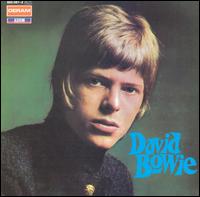
David Bowie - 1967 Decca
6
(Mediocre)

Space Oddity - 1969/1972 RCA
7
(Mediocre / Good)
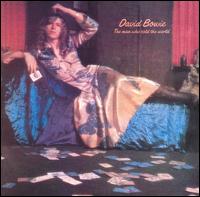
The Man Who Sold The World - 1970 RCA
7
(Mediocre / Good)
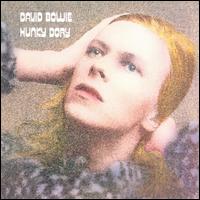
Hunky Dory - 1972 RCA
B
(Very Good)
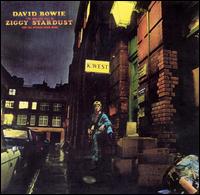
The Rise And Fall Of Ziggy Stardust And The Spiders From Mars - 1972 RCA
D
(Great / Very Good)

Aladdin Sane - 1973 RCA
B
(Very Good)
Ziggy Stardust: The Motion Picture - 1983/2003 RCA
D
(Great / Very Good)

Pin Ups - 1973 RCA
5
(Mediocre / Bad)
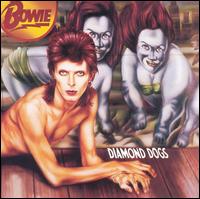
Diamond Dogs - 1974 RCA
7
(Mediocre / Good)

David Live - 1974/2005 RCA
6
(Mediocre)

Young Americans - 1975 RCA
6
(Mediocre)

Station To Station - 1976 RCA
D
(Great / Very Good)
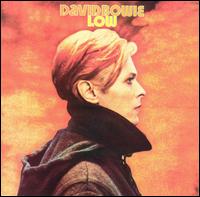
Low - 1977 RCA
B
(Very Good)

*"Heroes" - 1977 RCA*
D
(Great / Very Good)
Stage - 1978/2005 RCA
9
(Good)
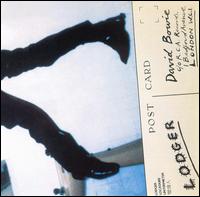
Lodger - 1979 RCA
9
(Good)
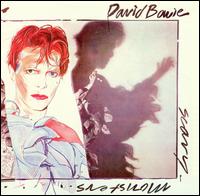
Scary Monsters (And Super Creeps) - 1980 RCA
B
(Very Good)

Let's Dance - 1983 EMI
8
(Good / Mediocre)
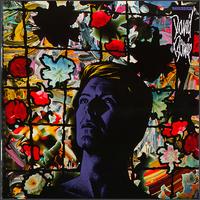
Tonight - 1984 EMI
3
(Bad)
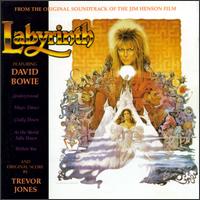
Labyrinth Original Soundtrack (With Trevor Jones) - 1986 Twenty One
3
(Bad)
The Beatles: Help!
The Beatles: Magical Mystery Tour
Can: Soundtracks
Bob Dylan: Pat Garrett and Billy the Kid
Brian Eno: Music for Films (granted, it's for movies that were never made)
Brian Eno: Apollo: Atmospheres And Soundtracks
Peter Gabriel: Birdy
Peter Gabriel: Passion
Peter Gabriel: Long Walk Home
The Kinks: Arthur
Pink Floyd: More
Pink Floyd: Obscured by Clouds
Pink Floyd: The Wall (maybe not technically, but yeah, it is)
Prince: Purple Rain
Frank Zappa: Uncle Meat
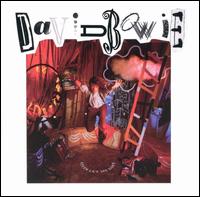
Never Let Me Down - 1987 EMI
4
(Bad / Mediocre)
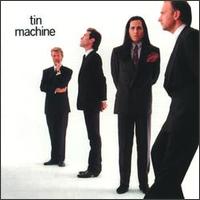
Tin Machine (Tin Machine) - 1989 EMI
8
(Good / Mediocre)
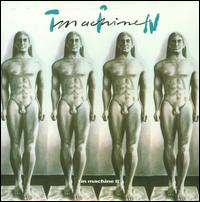
Tin Machine II (Tin Machine) - 1991 Victory
A
(Very Good / Good)
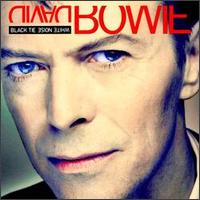
Black Tie White Noise - 1993 Savage
5
(Mediocre / Bad)

The Buddha Of Suburbia - 1993 BMG
9
(Good)
1. Outside - 1995 Arista
8
(Good / Mediocre)

Earthling - 1997 BMG
7
(Mediocre / Good)

Hours ... - 1999 Virgin
7
(Mediocre / Good)
Heathen - 2002 Columbia
B
(Very Good)
Reality - 2003 Columbia
9
(Good)

A Reality Tour - 2010 Columbia
A
(Very Good / Good)
The Next Day - 2013 Columbia
A
(Very Good / Good)
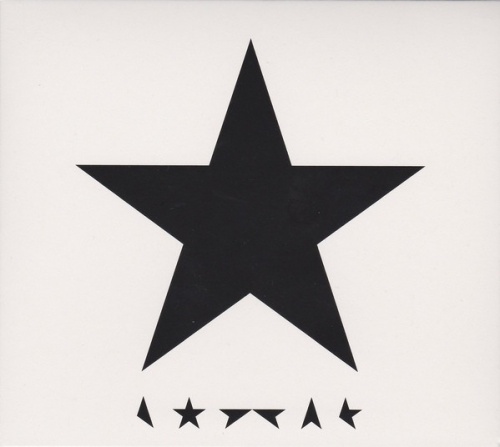
Blackstar - 2016 Columbia
D
(Great / Very Good)